.svg)
When you're serious about maximizing your garage space, a car lift transforms not just how you park, but how you use your entire garage. Whether you're a car enthusiast with multiple vehicles, someone looking to reclaim valuable floor space, or a homeowner who wants to create a dedicated work area, a car lift installation is one of the most impactful upgrades you can make. Garage Design Source specializes in helping Rockville, MD homeowners and businesses select, install, and maintain the perfect car lift system for their unique needs.
Car Lifts in Rockville, MD
When you're serious about maximizing your garage space, a car lift transforms not just how you park, but how you use your entire garage. Whether you're a car enthusiast with multiple vehicles, someone looking to reclaim valuable floor space, or a homeowner who wants to create a dedicated work area, a car lift installation is one of the most impactful upgrades you can make. Garage Design Source specializes in helping Rockville, MD homeowners and businesses select, install, and maintain the perfect car lift system for their unique needs.
A quality car lift does more than store a vehicle vertically - it opens up possibilities. Suddenly, that cramped two-car garage becomes a functional workshop, storage zone, and showcase space all at once. But choosing the right system and ensuring it's installed correctly requires expertise that goes far beyond simply bolting equipment to your floor. That's where our years of experience in garage transformations come into play.
Types of Car Lift Systems Available
Garage Design Source offers several car lift options, each designed for different garage layouts, vehicle types, and intended uses. Understanding the differences helps you make the right choice for your Rockville home or business.
Two-Post Lifts
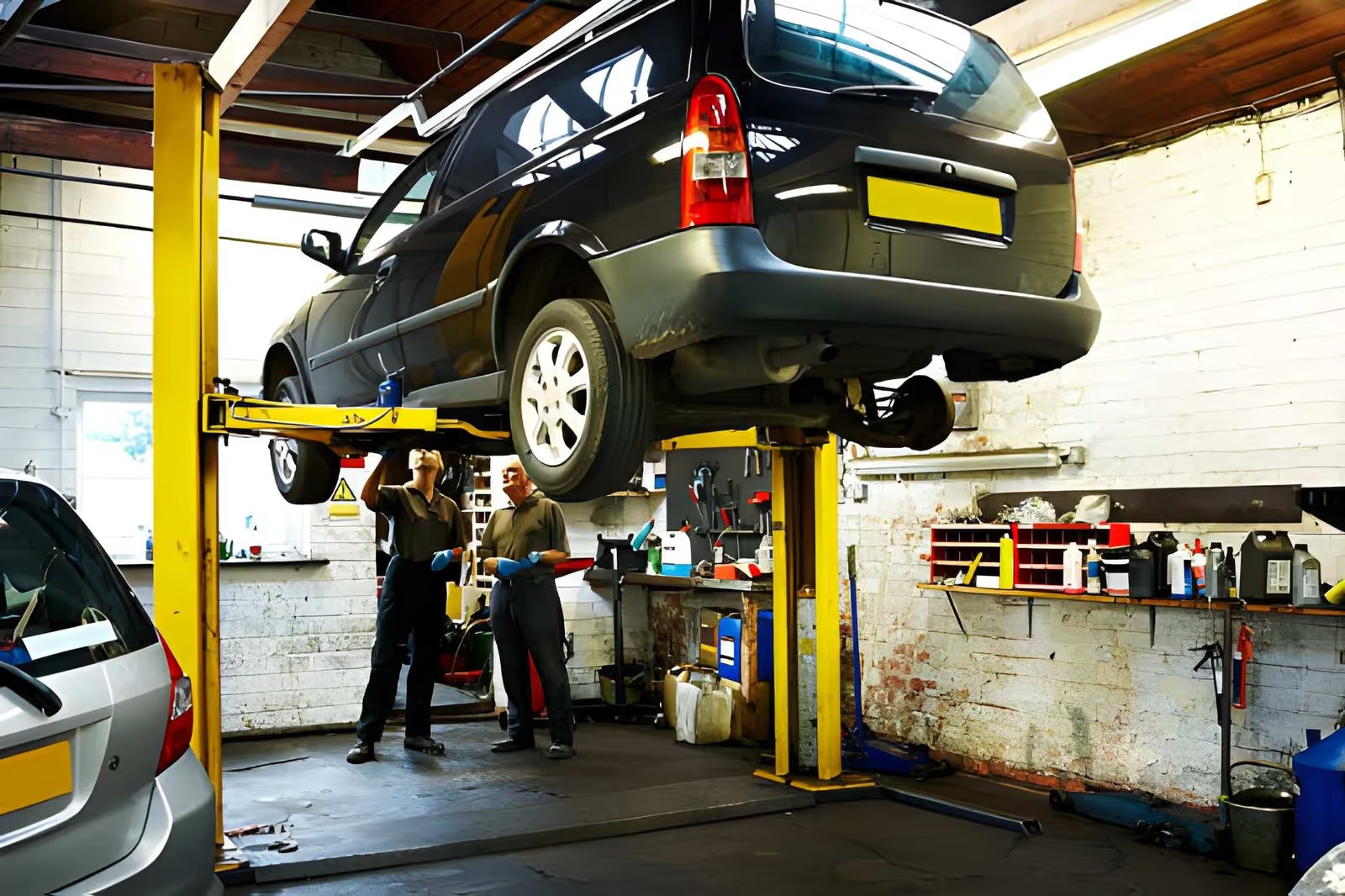
Two-post lifts are the most popular choice for homeowners and smaller commercial spaces. These systems use two vertical posts with hydraulic arms that lift vehicles from the frame at two points. They require relatively modest floor space compared to their lifting capacity, making them ideal for standard two-car or three-car garages. Two-post lifts typically accommodate vehicles from compact cars to full-size SUVs and light trucks. The open design beneath the lift allows you to work underneath the vehicle comfortably or store items in the space below, multiplying your garage's functional square footage.
Four-Post Lifts
Four-post lifts feature four vertical posts and a platform that supports the entire undercarriage of a vehicle. These systems excel at distributing weight evenly and are particularly suited for heavier vehicles, luxury cars, or situations where you want maximum stability and minimal vehicle contact points. Four-post lifts take up more floor space than two-post systems, but they provide unmatched security and are often preferred for long-term vehicle storage or for owners who are less experienced with lift operation.
Scissor Lifts
Scissor lifts operate differently from post-based systems. They use a diamond-shaped platform with hydraulic cylinders that compress and extend, raising the vehicle smoothly. Scissor lifts work well in garages with limited headroom since they rise more gradually than post lifts. They're excellent for standard-height sedans and compact vehicles and offer a sleek, modern aesthetic. However, they typically have lower weight capacities than post-based systems and require careful clearance planning.
Mobile/Portable Lifts
For homeowners who want flexibility without permanent installation, mobile lifts provide a solution. These can be moved between garages or stored away when not in use. While they sacrifice some stability compared to permanently anchored systems, modern mobile lifts have become increasingly robust and are excellent for occasional lifting needs or for those who like to adjust their garage layout seasonally.
Assessing Your Garage for a Car Lift
Before any installation begins, Garage Design Source conducts a thorough site assessment. This step is critical and often determines whether a project succeeds or creates problems down the road.
Measuring Ceiling Height and Clearance
The first measurement our team takes is ceiling height. Most two-post lifts require a minimum of 10 to 12 feet of clearance from the floor to the lowest ceiling obstruction. Four-post lifts typically need similar or slightly greater clearance depending on the specific model. Scissor lifts can sometimes work in lower-clearance spaces, but this depends on your vehicle height and the lift model. We measure not just the center of your garage but also account for any beams, ductwork, light fixtures, or other overhead obstacles that could interfere with vehicle placement or lift operation.
Evaluating Floor Space and Layout
We examine your garage's length, width, and overall layout. A two-post lift typically requires roughly 8 feet by 16 feet of floor space, though exact dimensions vary by model. Four-post lifts need more space - often 10 feet by 20 feet or larger. We also consider whether your current garage door opening is large enough for your vehicle to fit when lifted, and we assess how the lift placement will affect your ability to open doors, move around the space, and access other areas of your garage.
Checking for Structural Obstacles
Garage Design Source evaluates support beams, columns, wall-mounted storage systems, workbenches, or other permanent fixtures that might conflict with lift installation. We also check for existing epoxy flooring or other specialized floor treatments we may have installed previously, ensuring the lift's installation complements rather than compromises that work.
Foundation and Anchoring Requirements
One of the most critical aspects of car lift installation is proper foundation and anchoring. This is where many DIY attempts fail and where professional expertise matters enormously.
Concrete Floor Assessment
The concrete foundation must be in excellent condition. We thoroughly inspect for cracks, spalling, previous damage, or areas of weakness. Car lifts transmit thousands of pounds of force through their anchor points, and a compromised floor can shift or crack under this load, creating safety hazards and rendering the lift unusable. If your concrete floor needs repair, Garage Design Source can address this as part of the installation project, ensuring a solid foundation before the lift is anchored.
Proper Anchoring Techniques
Two-post and four-post lifts must be securely anchored to the floor using heavy-duty bolts, typically through concrete anchors or epoxy-set studs. The anchoring pattern is calculated based on the lift's specifications and your vehicle's maximum weight. Under-anchoring is dangerous and voids manufacturer warranties - over-anchoring is unnecessarily expensive but sometimes required in areas with specific seismic or structural concerns. We use industry-standard calculations and manufacturer guidelines to determine the exact anchoring specification for your installation.
Dealing with Epoxy-Coated Floors
If you have a garage floor coating from Garage Design Source or another provider, we carefully plan how lift anchoring will affect this investment. In most cases, we can work around the coating or create small strategic access points that maintain the floor's integrity and appearance. This attention to detail ensures your entire garage aesthetic remains cohesive after the lift is installed.
Weight Capacity and Vehicle Selection
Choosing a lift with appropriate weight capacity is fundamental to safe, trouble-free operation.
Understanding Rated Capacity
Every car lift has a maximum rated capacity, typically ranging from 7,000 pounds for smaller two-post systems to 14,000 pounds or more for heavy-duty four-post lifts. This rating represents the maximum total weight the lift can safely support. The capacity must exceed your vehicle's gross vehicle weight rating - the maximum weight the vehicle can safely weigh when fully loaded. For most passenger vehicles, a 7,000 to 9,000 pound capacity is sufficient. Larger SUVs, pickup trucks, and luxury vehicles often require 10,000 to 14,000 pound capacity.
Planning for Multiple Vehicles
If you own or plan to own multiple vehicles, we help you select a lift capacity that accommodates your heaviest vehicle. We also discuss whether you might benefit from multiple lifts if your garage and budget allow. Some clients choose a standard-capacity lift for everyday vehicles and a high-capacity lift for trucks or specialty vehicles.
Vehicle-Specific Considerations
Certain vehicles require specialized lift attachments or techniques. High-end sports cars, low-slung vehicles, or cars with fragile undercarriage components need careful lift point planning. Similarly, all-wheel-drive vehicles and those with air suspension systems sometimes require different handling than conventional vehicles. Our team accounts for these factors during the initial assessment and helps you understand any special considerations for your specific vehicle.
Electrical and Safety Features
Modern car lifts incorporate sophisticated safety systems and electrical components that must be properly installed and maintained.
Power Requirements and Installation
Most car lifts require 220-volt electrical service, similar to what major appliances use. We assess your garage's existing electrical system and determine whether you have sufficient capacity to operate the lift, or whether electrical upgrades are necessary. We only partner with licensed electricians for these installations, ensuring everything meets local building codes and safety standards in Rockville, MD and surrounding areas.
Safety Lock Systems
Quality car lifts include mechanical safety locks that hold the vehicle even if hydraulic pressure is lost. These locks engage automatically as the lift rises and must be manually released before lowering. We verify that safety locks function properly during installation and explain their operation to you. These systems are not optional conveniences - they're critical safety features that prevent catastrophic failures.
Emergency Descent Mechanisms
Every lift should include a manual descent capability that works independently of the electrical system. This allows you to lower a vehicle even during power outages or equipment failures. We test these systems during installation and ensure you understand how to operate them.
Control Station Design
We position the lift's control pad or remote in a location that gives you clear visibility of the vehicle and lift during operation. This typically means placing controls away from the lift itself so you can observe the entire process safely.
Installation Process and Timeline
Understanding what to expect during installation helps you prepare and ensures the process goes smoothly.
Pre-Installation Preparation
Before our installation team arrives, we advise you to clear the installation area completely. Remove stored items, vehicles, and anything else from the space where the lift will be anchored. If floor preparation is needed, we schedule this ahead of the main installation day.
On-Site Installation
The installation team typically begins by confirming measurements and marking anchor points with precision. We prepare the concrete as needed, install anchor bolts or studs, and allow proper curing time if adhesive anchoring is used. The lift framework is then assembled and positioned, with all hydraulic connections installed and tested. The entire process typically takes one full day for a two-post lift and one to two days for a four-post system, though timelines vary based on specific site conditions.
System Testing and Training
Once installed, we perform comprehensive testing of all lift functions, safety systems, and emergency features. We then walk you through operation, routine maintenance, and safety protocols. You'll understand proper lift point placement for different vehicles, how to recognize potential issues, and when to schedule professional service.
Final Inspection and Documentation
We complete a final inspection, ensure all bolts are properly torqued, and verify that all systems function correctly. You receive documentation including installation photos, maintenance schedules, warranty information, and emergency descent instructions.
Maintenance and Long-Term Care
Proper maintenance keeps your car lift operating safely and extends its lifespan significantly.
Routine Inspection Schedule
We recommend monthly visual inspections where you check for any visible leaks, damage to hoses, or irregularities in lift operation. Listen for unusual sounds during operation and feel for any hesitation or jerky movement. Quarterly inspections by a professional technician identify developing issues before they become safety concerns.
Hydraulic System Maintenance
The hydraulic fluid in your lift gradually degrades over time and should be changed according to the manufacturer's specification - typically every 2 to 3 years depending on usage. We perform these fluid changes and inspections as part of our service plans.
Mechanical Component Care
Periodically, bolts and fasteners need to be checked for tightness, seals may need replacement, and the lift's mechanical components should be lubricated. These services prevent gradual degradation and catch potential problems early.
Cleaning and Corrosion Prevention
Dust and moisture can accumulate on lift components, particularly in garages with humidity issues. We recommend periodic cleaning and can apply protective coatings to help prevent corrosion. This is especially important in the Maryland climate where seasonal humidity can be significant.
Service Plans and Warranty Information
Garage Design Source provides comprehensive coverage options to protect your investment.
Standard Warranty Coverage
Most car lifts come with manufacturer warranties covering hydraulic components, structural integrity, and electrical systems for one to three years from installation, depending on the specific model and manufacturer. We provide full warranty documentation with every installation.
Extended Service Plans
We offer extended service plans that include regular maintenance visits, priority emergency service, and parts coverage beyond the manufacturer warranty. These plans provide peace of mind and ensure your lift receives professional attention on a predictable schedule rather than only when problems arise.
Parts and Repair Services
Should your lift require repairs, we maintain inventory of common replacement parts and can often address issues within days rather than weeks. For more complex repairs, we work with manufacturers and specialized service providers to ensure quality work.
Why Choose Garage Design Source for Your Car Lift Installation
Garage Design Source brings specialized expertise to car lift installation that generic garage contractors or general handymen cannot match. We're locally owned and operated in the Washington D.C. metro region, with deep knowledge of local building codes, climate considerations, and architectural styles common to Rockville and surrounding Maryland areas.
We view car lift installation as part of a comprehensive garage transformation strategy. If you've invested in premium epoxy flooring, quality storage systems, or an upgraded garage door, we ensure the lift installation complements and enhances these investments rather than compromising them. Our team thinks holistically about how every element of your garage works together.
Our experience with thousands of garage projects means we've encountered virtually every possible site condition, vehicle type, and client preference. We handle complications that would stymie less experienced installers - unusual ceiling configurations, older homes with settling concrete, tight spaces, or vehicles requiring specialized lift techniques. This expertise translates directly into a smoother installation process and a better long-term result.
We also prioritize safety and compliance above all else. Every installation meets or exceeds local building codes and manufacturer specifications. We don't cut corners or advise clients to accept sub-standard solutions to reduce costs. When we recommend a solution, it's because it's the right approach for your specific situation.
Common Questions About Car Lift Ownership
How much space do I need?
A two-post lift typically requires approximately 8 by 16 feet of floor space, though exact dimensions depend on the specific model and your vehicle. Four-post lifts usually need 10 by 20 feet or more. During our site assessment, we measure your space precisely and confirm whether a lift is feasible.
Can I install a lift if I have low ceilings?
If your garage has ceiling height of 10 to 12 feet, most lifts are possible. Scissor lifts sometimes work in lower-clearance situations. We measure your specific ceiling height and discuss options that will work for your space.
What if my garage floor is already coated?
Garage Design Source has extensive experience anchoring lifts through high-quality epoxy and polyaspartic floor coatings. We carefully plan anchor point locations and use techniques that preserve your floor's appearance and integrity.
How often does a lift need maintenance?
We recommend monthly visual inspections and quarterly professional inspections. Hydraulic fluid should be changed every 2 to 3 years depending on usage and climate. Regular maintenance prevents most issues and extends lift lifespan.
Is a lift safe for long-term vehicle storage?
Yes, when properly installed and maintained, a lift safely stores a vehicle for extended periods. Safety lock systems automatically engage when the lift rises, holding the vehicle even during power outages. However, we recommend periodically lowering the vehicle and checking underneath to ensure no issues develop.
Can I use a lift for two vehicles at once?
Some two-post lifts can accommodate two smaller vehicles if they're positioned side by side, though this depends on the lift's specific design and floor space available. Four-post lifts typically hold one vehicle at a time. We discuss your specific needs and recommend configurations that work for your situation.
What happens if the power goes out?
Modern lifts include manual descent mechanisms that operate independently of electrical systems. This allows you to safely lower the vehicle even during power outages. We demonstrate this system during installation and provide written instructions.
Installing a car lift represents a significant investment in your garage and your home's functionality. When you choose Garage Design Source, you're selecting a team with deep expertise in not just lift installation, but in how lifts integrate with your entire garage environment. We'll guide you through every decision, manage the installation professionally, and support you through years of reliable operation. Contact us to schedule your garage and site assessment today.