.svg)
Your garage door's springs and cables are critical components that work together to support the weight of your door and enable smooth, reliable operation. In McLean, VA - where homes range from classic colonial estates to modern renovations - a properly functioning garage door is essential to daily life and home security. When springs and cables begin to wear or break, the consequences go beyond inconvenience. Understanding the signs of failure, the safety risks involved, and the professional replacement process can help you make informed decisions and protect your investment.
Spring and Cable Replacement in McLean, VA
Your garage door's springs and cables are critical components that work together to support the weight of your door and enable smooth, reliable operation. In McLean, VA - where homes range from classic colonial estates to modern renovations - a properly functioning garage door is essential to daily life and home security. When springs and cables begin to wear or break, the consequences go beyond inconvenience. Understanding the signs of failure, the safety risks involved, and the professional replacement process can help you make informed decisions and protect your investment.
Garage Design Source specializes in comprehensive garage door solutions, including expert spring and cable replacement for McLean homeowners. With years of experience serving the Washington D.C. metro area, we understand the specific needs of Northern Virginia's diverse residential properties. This guide walks you through everything you need to know about spring and cable replacement - from identifying wear patterns to understanding the repair timeline and long-term maintenance strategies.
Why Springs and Cables Matter to Your Garage Door
Garage door springs and cables are engineered to handle thousands of open and close cycles. A standard residential garage door weighs between 300 and 500 pounds, and the springs counterbalance this weight to make operation possible. Meanwhile, cables guide the door smoothly along its tracks and prevent the door from crashing down if a spring fails.
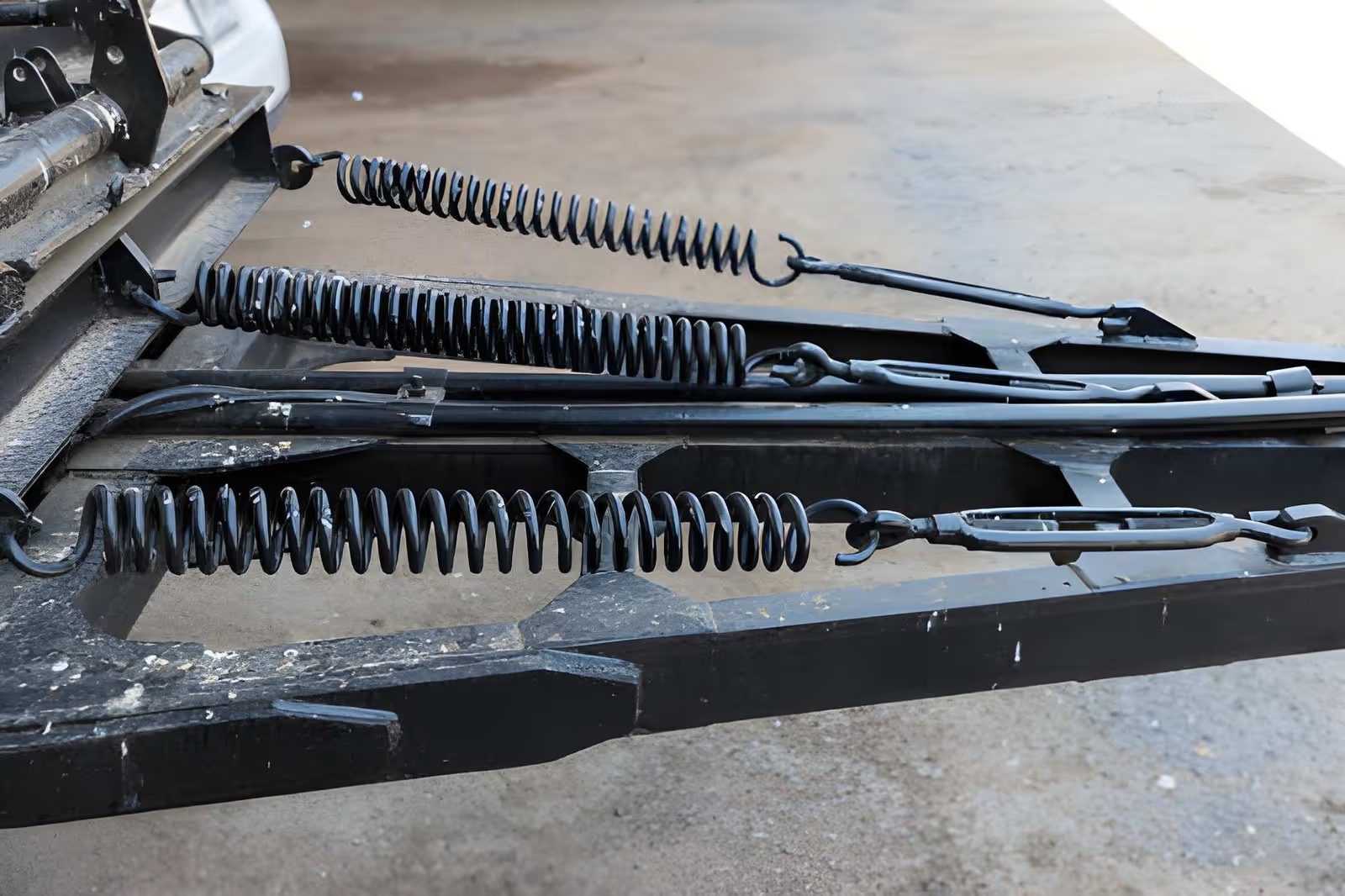
The two main types of springs found in garage doors are torsion springs and extension springs. Torsion springs are mounted horizontally above the garage door opening and twist to store energy. Extension springs run parallel to the tracks on either side of the door and stretch to provide the counterbalance. Both types rely on high-tension design and precise calibration, which is why DIY replacement is not recommended and can be dangerous.
Your cables are steel-wound wires designed to work in tandem with the springs. When a spring fails, the cable may snap under sudden stress. Similarly, a frayed or broken cable reduces the spring's effectiveness and can cause uneven door movement or complete failure. The interplay between springs and cables is so critical that damage to one component often affects the other.
Common Signs Your Springs and Cables Need Replacement
Recognizing the early warning signs of spring and cable wear can help you avoid emergency breakdowns and potential safety hazards. McLean homeowners should watch for these indicators:
- Loud noises during operation - Squeaking, popping, or grinding sounds often indicate friction or metal fatigue. A loud bang or snap suggests a spring has already broken.
- Uneven door movement - If your garage door tilts, lags on one side, or moves at irregular speeds, the springs or cables may be compromised.
- Door won't open or opens very slowly - When springs lose tension, the garage door operator must work harder, and opening becomes slow or impossible without power assistance.
- Visible gaps or coils in the spring - Broken coils or visible damage to the spring itself are clear signs of failure.
- Frayed or loose cables - Visible fraying, kinks, or slack in the cables indicate deterioration and imminent failure.
- Door hangs unevenly in the closed position - Springs on each side should be balanced; if one side sags, the spring on that side has weakened.
- Remote or button requires extra clicks to operate - Increased resistance suggests the springs are losing their counterbalancing power.
- Door falls or closes too quickly - Loss of spring tension can cause the door to descend faster than normal, a safety hazard.
If you notice any of these signs in your McLean home, it's important to contact a professional. Continuing to operate a garage door with worn or broken springs and cables accelerates damage to other components like the opener, rollers, and tracks.
Safety Risks of Broken Springs and Cables
Understanding the safety implications of spring and cable failure is essential for every homeowner. Springs and cables operate under extreme tension - typically between 100 and 200 pounds of pressure. When they fail, this tension releases suddenly and can cause serious injury or property damage.
Sudden door collapse is the most obvious risk. A complete spring or cable failure means the full weight of your garage door - often 400-plus pounds - falls without support. This can trap a vehicle, damage property, or injure anyone nearby. In families with children or pets, this risk is particularly concerning.
Injury from spring tension is a professional-level hazard. Attempting to adjust or replace springs yourself can result in the spring unwinding violently, causing severe cuts, broken bones, or eye injuries. Springs remain under tension even when the door is in the closed position, making them unpredictable if mishandled.
Incomplete operation creates secondary dangers. A garage door that won't close properly leaves your home vulnerable to weather, pests, and security breaches. In McLean's climate - where winters bring occasional snow and ice - an inoperable garage door can compromise your vehicle and stored items.
Opener strain and failure occurs when springs weaken. The garage door opener must work harder to lift a heavier load, accelerating its wear and eventual failure. This can result in a cascade of expensive repairs rather than addressing the root cause early.
For these reasons, professional replacement by trained technicians is not just recommended - it's the only safe approach. Garage Design Source ensures that all spring and cable replacements follow industry safety standards and local codes.
The Professional Spring and Cable Replacement Process
Understanding what's involved in a professional replacement helps you appreciate the expertise required and sets realistic expectations for your project. Here's what the process typically involves:
1. Comprehensive Inspection and Diagnosis
Before any replacement work begins, a trained technician evaluates the entire garage door system. This includes checking the condition of springs, cables, rollers, tracks, hinges, weatherstripping, and the opener itself. The inspection identifies not only which components need replacement but also whether damage to other parts has resulted from spring or cable failure.
During inspection, the technician measures the springs to determine the correct replacement specifications. Springs are calibrated based on the door's weight, dimensions, and material. Using incorrect specifications can result in poor performance, accelerated wear, or safety issues. For McLean homes with custom or oversized garage doors, precise measurements are particularly critical.
2. Parts Selection and Sourcing
Not all replacement springs and cables are created equal. High-quality components ensure longevity, smooth operation, and safety. Garage Design Source sources springs and cables that meet or exceed manufacturer specifications, ensuring compatibility with your garage door system.
Spring selection depends on several factors:
- Door weight and size - Standard residential doors typically use springs rated for 10,000 to 15,000 cycle lifespans, while heavy or oversized doors may require commercial-grade springs.
- Spring type - Torsion springs are more durable and provide smoother operation than extension springs, though both types are available.
- Cycle lifespan - Residential springs often last 15,000 to 20,000 cycles (approximately 7-10 years of typical use). Premium springs can extend this lifespan significantly.
- Cable gauge and material - Thicker, steel-core cables resist fraying and offer better durability than standard options.
For McLean homeowners, we recommend quality components that balance durability with long-term value. Investing in premium springs and cables during replacement can extend the time before your next service and reduce overall maintenance costs.
3. Safe Removal of Broken Components
Removing springs and cables requires specialized tools and expertise. The garage door must first be secured to prevent accidental lowering. The tension in the springs must be carefully released using a winding bar - a tool that few homeowners have or know how to use safely.
The technician loosens the tension in small, controlled increments, allowing the spring to unwind gradually. Rushing this step or using incorrect techniques can cause the spring to snap violently, sending the winding bar across the garage or toward the technician. Once tension is fully released, the springs and cables are unbolted and removed.
During removal, the technician inspects the mounting hardware, rollers, and tracks for damage caused by the spring or cable failure. Worn rollers or bent tracks are addressed during this phase to prevent future problems.
4. Installation of New Springs and Cables
Installing new springs and cables is the reverse of removal, but with critical precision requirements. The new springs must be mounted on a reinforced mounting bracket, and the tension must be set exactly according to manufacturer specifications. Under-tensioning results in poor door performance and opener strain; over-tensioning can damage the opener and create safety hazards.
The technician uses a winding bar to slowly apply tension to the spring, measuring torque or counting rotations depending on the spring type. Once tension is set, the cable is attached and routed through the pulleys. The cable must be taut but not over-tight, ensuring it moves smoothly as the door operates.
All bolts and hardware are tightened to specification, and the entire assembly is double-checked for alignment and security. For McLean homes with older garage door systems, the technician may recommend upgrading hardware or pulleys if wear is evident.
5. Safety Testing and Balancing
Before the job is complete, comprehensive safety testing ensures your garage door operates properly and safely. The technician performs a balance test by disconnecting the opener and manually lifting the door about two feet. A properly balanced door should stay in place without drifting up or down - if it drifts, spring tension requires adjustment.
The opener is then re-engaged, and the door is cycled through multiple open and close cycles. The technician listens for unusual noises, watches for smooth, even movement, and confirms the door closes completely and opens fully. An emergency release test ensures the manual release mechanism works if power is lost.
Safety sensors are tested to confirm they stop the door if an obstruction is detected. The auto-reverse feature is verified - if you place your hand in the door's path, it should reverse immediately. These features are critical for protecting your family and your vehicle.
6. Final Inspection and Warranty Information
Once all testing is complete, you receive a detailed explanation of the work performed, the specifications of your new springs and cables, and the warranty coverage. Most quality springs and cables come with warranties ranging from three to five years, with some premium options offering longer coverage.
The technician provides maintenance recommendations specific to your system, including how often to lubricate cables and rollers, signs to watch for, and when to schedule routine inspections. This guidance helps you maximize the lifespan of your new components.
Estimated Timeline and Project Duration
Spring and cable replacement in McLean typically requires one appointment, though the exact duration depends on your specific situation. Understanding the timeline helps you plan around your schedule.
For a single broken component - If only one spring or cable is damaged, the job usually takes 1-2 hours. The technician safely releases tension, removes the broken part, installs the replacement, performs balance testing, and verifies safety features.
For a complete spring and cable replacement - If both springs and both cables require replacement, expect 2-3 hours. Dual spring replacement requires more careful balancing and testing to ensure both sides operate in perfect synchronization.
If additional components need attention - If the inspection reveals damaged rollers, hinges, or tracks that should be replaced to prevent future problems, the timeline may extend to 3-4 hours. Some homeowners prefer to address these issues during the spring and cable replacement rather than scheduling multiple service calls.
For commercial or oversized doors - Large or custom garage doors may require additional time for precise specification measurement and installation. McLean homes with specialty doors or unique systems may need 3-4 hours.
Most replacements are completed in a single service visit, minimizing disruption to your routine. Garage Design Source schedules appointments during daytime hours at your convenience, ensuring your garage door is restored to full functionality efficiently.
Warranty and Long-Term Coverage
Quality replacement parts come with manufacturer warranties that protect your investment. Understanding warranty coverage helps you know what's protected if problems arise.
Spring warranties typically cover manufacturing defects for 3-5 years from the installation date. Most warranties are prorated, meaning coverage decreases over time. If a spring fails due to a manufacturing defect within the warranty period, the manufacturer or contractor may replace it at no cost or at a reduced price depending on the warranty terms.
Cable warranties are similar, usually covering manufacturing defects for 3-5 years. Cables can wear out faster than springs if a garage door is operated frequently or if the door is not properly maintained, so some warranties specify usage conditions.
Installation warranties from Garage Design Source cover the quality of workmanship. If an installation error causes a problem, we address it promptly. This is why working with an experienced, local contractor matters - we stand behind our work and have a reputation to maintain in the McLean and Northern Virginia community.
What warranties typically do not cover includes wear and tear from normal use, damage from accidents or environmental factors, or problems resulting from deferred maintenance. Warranties also don't typically cover labor for replacement if the component fails outside the warranty period.
To maximize your warranty protection, keep documentation of the installation, follow recommended maintenance guidelines, and contact us promptly if you notice any issues. Regular maintenance - such as lubricating cables and rollers annually - can help extend component life and may protect warranty coverage.
Preventative Maintenance to Extend Spring and Cable Life
While springs and cables eventually need replacement due to normal wear, proactive maintenance can extend their lifespan and prevent premature failure. McLean homeowners benefit from establishing a simple maintenance routine.
Annual visual inspection is the foundation of preventative maintenance. Once per year - ideally in spring or fall - take time to examine your garage door system. Look for rust on springs or cables, visible damage or fraying, signs of leakage near mounting hardware, and unusual corrosion. Early detection of problems allows you to schedule maintenance before failure occurs.
Regular lubrication of rollers, pulleys, and cable guides reduces friction and wear. Use a silicone-based lubricant designed for garage doors - not WD-40 or heavy grease, which can attract dirt and cause buildup. Apply lubricant sparingly to rollers and hinges every 6-12 months, more frequently if you operate your garage door multiple times daily.
Keep your garage reasonably clean and dry. Moisture promotes rust on springs and cable hardware, particularly in Northern Virginia's humid climate. If your garage is damp, consider a small dehumidifier or ensure proper ventilation to reduce humidity.
Protect your springs and cables from extreme temperature fluctuations. While garage temperature swings are often unavoidable, excessive heat or cold can affect spring tension and accelerate wear. In McLean winters, ice buildup on the door can add weight and stress springs; keep the door area clear of ice or debris.
Operate your garage door regularly. Counterintuitively, garage doors that sit unused for long periods can deteriorate faster. Regular opening and closing cycles keep lubrication distributed and allow you to notice changes in performance. If you travel frequently, operating the door even just once weekly helps maintain system health.
Address repairs promptly. If you notice squeaking, grinding, or uneven movement, schedule a professional inspection rather than waiting for complete failure. Minor adjustments or component replacements are far less expensive than emergency repairs or system overhauls.
Test your safety features monthly. Most garage doors have auto-reverse and sensor features designed to stop the door if an obstruction is detected. Once monthly, place an object in the door's path to ensure the auto-reverse function works. This simple test protects your vehicle and your family.
Spring and Cable Replacement Protects Your Investment
Your garage is more than just a place to park your car - it's storage for your tools, equipment, and seasonal items. For many McLean homeowners, the garage represents a significant investment, especially if you've upgraded the flooring, added storage systems, or installed specialized features like EV chargers or car lifts. A malfunctioning garage door puts these investments at risk and can leave your home vulnerable.
Broken springs and cables also threaten your vehicle. A garage door that won't close exposes your car to weather, theft, and damage. In McLean's seasonal climate, this means your vehicle endures sun, rain, ice, and snow without protection - accelerating wear on paint, interior, and mechanical components.
Beyond practical concerns, a non-functioning garage door impacts your home's curb appeal. Many McLean residents take pride in the appearance of their properties, and a garage door that hangs unevenly or won't close properly detracts from your home's visual presentation.
Professional spring and cable replacement from Garage Design Source restores your garage door to full functionality, protects your vehicle and stored items, and maintains your home's appearance and security. By addressing spring and cable issues promptly and maintaining your system proactively, you ensure reliable operation for years to come.
Why Choose Garage Design Source for Spring and Cable Replacement
Garage Design Source brings specialized expertise and local knowledge to every garage door project. As a locally owned and operated business serving the Washington D.C. metro region since the early 2000s, we understand McLean's residential needs and the specific challenges posed by Northern Virginia's climate and housing styles.
Our technicians are trained in all aspects of garage door system repair and replacement. We source high-quality replacement parts that meet manufacturer specifications and come with solid warranty coverage. We prioritize safety above all else, using industry-standard tools and techniques to ensure every spring and cable replacement is performed correctly.
Beyond technical expertise, we believe in clear communication. When you contact Garage Design Source for a spring and cable replacement, you receive a thorough inspection, honest assessment of your situation, and transparent explanation of recommended services. We don't upsell unnecessary services, and we focus on solutions that provide lasting value.
Whether your springs and cables require replacement due to age-related wear, unexpected failure, or damage from extended use, Garage Design Source handles the job with professionalism and precision. We serve McLean residents with the same dedication to quality and customer satisfaction that has built our reputation across the Washington D.C. area.