.svg)

Electric vehicles are transforming how Northern Virginia families think about transportation, but owning an EV means rethinking how you charge at home. Installing a reliable EV charging station in your garage isn't just about convenience - it's about ensuring you have the infrastructure to support your vehicle's performance and your household's energy needs for years to come. Garage Design Source specializes in professional EV charger installation in Vienna, VA, bringing the same commitment to quality and durability that has defined our garage solutions for over two decades. Whether you're transitioning to electric vehicles or adding a second charging station to your home, understanding the installation process, electrical requirements, and your options helps you make the right investment.
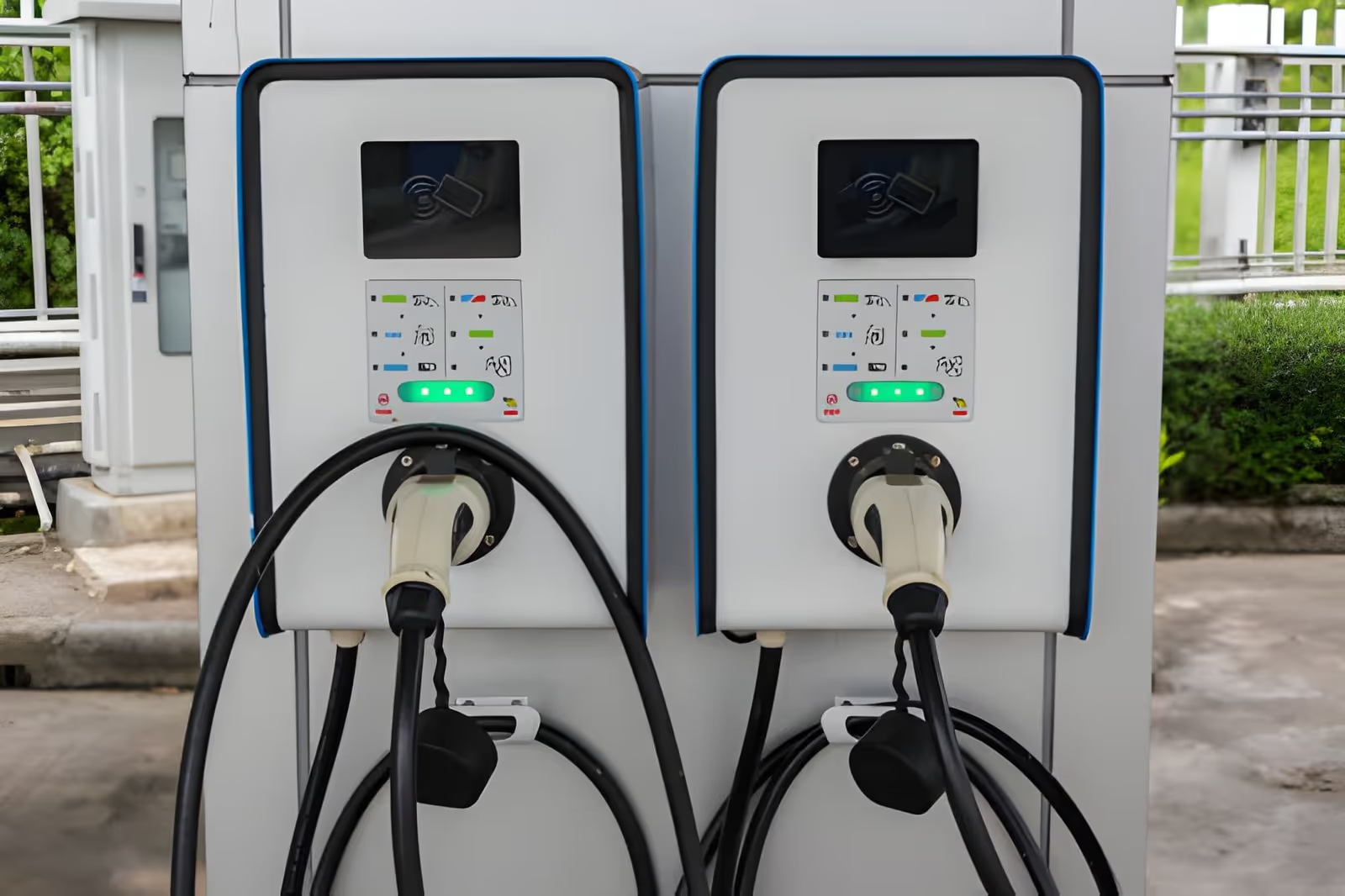
EV Charger Installation in Vienna, VA
Electric vehicles are transforming how Northern Virginia families think about transportation, but owning an EV means rethinking how you charge at home. Installing a reliable EV charging station in your garage isn't just about convenience - it's about ensuring you have the infrastructure to support your vehicle's performance and your household's energy needs for years to come. Garage Design Source specializes in professional EV charger installation in Vienna, VA, bringing the same commitment to quality and durability that has defined our garage solutions for over two decades. Whether you're transitioning to electric vehicles or adding a second charging station to your home, understanding the installation process, electrical requirements, and your options helps you make the right investment.
Why Professional EV Charger Installation Matters
Installing an EV charger in your garage is fundamentally different from a typical home improvement project. It involves electrical work, code compliance, permitting, and equipment selection that directly impact safety and performance. Many homeowners underestimate the complexity - they assume any electrician can handle it or attempt DIY installations that create serious safety risks.
The truth is that EV charger installation requires a contractor who understands both garage environments and electrical infrastructure. Your home's electrical panel, wiring capacity, and circuit breaker configuration all determine which charger type you can support and whether you need upgrades. Garage Design Source brings specialized expertise in assessing your existing electrical system, identifying necessary upgrades, and installing chargers that integrate seamlessly into your garage design.
Professional installation also ensures your setup complies with local Vienna, VA building codes and meets manufacturer specifications - protecting your warranty and your home's safety. Cutting corners on installation can void warranties, create fire hazards, or result in unreliable charging performance.
Understanding Your Home's Electrical Capacity
Before selecting and installing an EV charger, Garage Design Source conducts a thorough assessment of your home's electrical system. This evaluation is one of the most critical steps in the entire process because it determines what you can realistically install and whether panel upgrades are necessary.
During this assessment, we examine several key factors:
- Current electrical panel capacity: Your home's service panel has a maximum amperage rating, typically 100, 150, or 200 amps. Level 2 chargers draw significant power, usually 30-50 amps, so we verify that your panel can safely dedicate this capacity to a charging circuit.
- Available circuit space: Even if your panel has the total amperage, you need an actual open breaker slot to install a new charging circuit. Older homes or fully utilized panels may require expansion.
- Wire gauge and distance: The distance from your electrical panel to your garage determines the wire gauge needed to safely carry charging power without voltage drop or heat buildup. Longer distances or smaller wire gauges reduce charging efficiency.
- Grounding and safety systems: Modern EV chargers include ground fault circuit interrupter (GFCI) protection, but your home's grounding system must be properly installed to ensure this protection works.
- Existing load demands: We calculate your home's total electrical demand, including heating, cooling, appliances, and other circuits, to ensure adding a charger doesn't overload the system or trigger frequent breaker trips.
This detailed assessment prevents costly mistakes and ensures your charging installation is both safe and reliable from day one.
Panel Upgrades: When and Why They're Necessary
Many Vienna, VA homeowners discover that their existing electrical panel cannot safely support a Level 2 charger without upgrades. This is especially common in homes built before the 2000s, when residential electrical demands were much lower.
A panel upgrade involves replacing your existing service panel with one that has higher amperage capacity - typically upgrading from 100 to 150 amps or from 150 to 200 amps. This process requires coordinating with your utility company, obtaining permits, and scheduling an inspection by the local authority.
While panel upgrades add to your EV charger installation cost and timeline, they're a worthwhile investment for several reasons:
- Future-proofing your home: A higher-capacity panel supports not just your EV charger but also future electrical needs, heat pump installation, or additional circuits you may want later.
- Reliable charging performance: Without adequate capacity, your charger operates at reduced power, extending your charging time significantly.
- Safety and peace of mind: An undersized panel risks overheating, breaker trips, and potential fire hazards. A properly sized panel eliminates these risks.
- Home value: A modern, upgraded electrical panel is a selling point for future buyers and supports the premium garage environment you're creating.
Garage Design Source handles all aspects of the panel upgrade process, coordinating with electricians, utility companies, and permitting authorities so you don't have to navigate these details yourself.
Level 2 vs. Smart Charger Options
Once your electrical system is assessed, the next decision is selecting the right charger type. For most Vienna, VA homeowners, the choice comes down to Level 2 chargers or smart-enabled Level 2 chargers. (Note: Level 1 chargers, which plug into standard household outlets, are too slow for practical daily use.)
Level 2 Chargers are the standard for residential EV installations. They require a dedicated 240-volt circuit and deliver 25-30 miles of range per hour of charging, depending on your vehicle and charger power rating. A Level 2 charger can fully recharge most EVs overnight, making it ideal for daily charging at home.
Level 2 chargers come in different power outputs, typically 16 amps, 32 amps, or 48 amps. Higher amperage chargers deliver faster charging but require larger circuit capacity. For most homes, a 32-amp Level 2 charger strikes the right balance between charging speed and electrical requirements.
Smart Chargers integrate WiFi connectivity and app-based controls, allowing you to:
- Monitor charging remotely and receive notifications when charging completes
- Schedule charging for off-peak utility hours to reduce electricity costs
- Adjust charging power in real-time based on household demand
- Track energy usage and charging history
- Receive software updates for improved functionality
Smart chargers cost more upfront but appeal to tech-savvy homeowners and those interested in maximizing the efficiency of their charging setup. If your utility company offers time-of-use rates - charging at night costs less than charging during peak hours - a smart charger helps you take full advantage of these savings.
Garage Design Source discusses both options with you during the planning phase, helping you understand which features matter for your lifestyle and budget. We then ensure your chosen charger is properly installed to enable all of its functionality.
Site Planning for Wall-Mounted and Pedestal Installations
Where you install your charger in the garage affects both convenience and aesthetics. Garage Design Source designs the charger placement as part of your overall garage transformation, not as an afterthought.
Wall-Mounted Installations are the most popular option for residential garages. The charger mounts securely to the garage wall at a comfortable height - typically 4 to 5 feet from the ground - making the charging connector easy to reach from your vehicle. Wall mounting also keeps the charger out of the way of foot traffic and other garage activities.
We position wall-mounted chargers strategically based on your parking layout. If you always park in the same spot, the charger should be on that wall. If you have multiple parking spaces or occasional guest parking, we discuss optimal placement during the planning phase.
Wall mounting also integrates cleanly with your garage design. Garage Design Source coordinates the charger installation with your other garage improvements - flooring, storage systems, lighting, and door upgrades - so everything feels intentional and cohesive.
Pedestal Installations work better in garages where wall mounting isn't practical, such as when electrical panels or structural obstacles interfere with ideal wall placement. A pedestal charger stands on the garage floor and connects to underground or overhead wiring. This option provides flexibility in positioning but requires more substantial footprint planning to avoid obstructing movement in your garage.
Our site planning process also considers:
- Weather protection: Ensuring your charger installation protects the equipment from moisture and temperature extremes that could affect longevity.
- Wire routing: Planning how electrical wiring runs from your panel to the charger location, minimizing exposed wires and keeping conduit out of sight where possible.
- Accessibility: Confirming that your vehicle can easily reach the charger without awkward maneuvering and that the charging connector reaches your vehicle's charge port.
- Lighting: Coordinating charger placement with garage lighting so you can see the connector and vehicle clearly during evening charging.
Garage Design Source approaches charger placement with the same attention to detail we bring to garage flooring, storage, and door installations. Your EV charger should enhance your garage environment, not dominate it.
Permitting and Code Compliance in Vienna, VA
EV charger installation in Vienna, VA requires permits and inspections to ensure the work meets local electrical codes and safety standards. This process protects you, your home, and your neighbors - and it's non-negotiable for a safe, reliable installation.
Garage Design Source handles the permitting process on your behalf. We obtain the necessary permits from the Town of Vienna or Fairfax County (depending on your specific location), submit installation plans for review, and coordinate inspections at the appropriate stages of the project.
Key code requirements we follow include:
- National Electrical Code (NEC) standards: The NEC is the national standard for electrical installation, including EV chargers. We ensure every aspect of your installation complies with current NEC requirements.
- Virginia electrical licensing: Our electricians hold the proper Virginia licenses and credentials to perform EV charger installation work.
- Local variance requirements: Vienna and Fairfax County may have specific requirements beyond the NEC. We stay current with any local amendments and ensure compliance.
- GFCI and electrical protection: Modern chargers include built-in ground fault protection, but we verify that the entire circuit, from the panel to the charger, meets protection standards.
- Proper grounding and bonding: We ensure your home's grounding system is properly integrated with the charger installation to prevent electrical hazards.
Attempting to bypass permitting or choosing an unlicensed installer creates serious risks: your homeowner's insurance may deny claims related to an unpermitted installation, you could face fines or orders to remove the charger, and you lose all warranty protection. Professional, permitted installation with Garage Design Source eliminates these risks entirely.
Step-by-Step Installation Process
Understanding what happens during your EV charger installation helps you prepare for the project and know what to expect. Garage Design Source follows a systematic process to ensure quality and minimize disruption to your home.
Pre-Installation Inspection and Final Planning
Before installation begins, we conduct a final on-site inspection to confirm electrical capacity, finalize the charger location, and verify that all permits are approved. We discuss the installation timeline with you and answer any last-minute questions.
Electrical Preparation and Conduit Installation
Our team begins by routing electrical conduit (protective tubing) from your panel to the charger location. We size the conduit and wiring based on the charger's power requirements and the distance involved. For wall-mounted chargers, we typically run conduit along the garage wall, sometimes concealing it behind trim or keeping it neatly exposed depending on your garage aesthetic.
Panel Work and Circuit Installation
Next, we install a new circuit breaker in your electrical panel rated for the charger's amperage requirements. The new breaker connects to the conduit running to your charger location. This work is performed with your main electrical service safely shut off or managed according to code requirements.
Charger Mounting and Connection
Once the electrical circuit is ready, we mount your charger to the wall (or pedestal, if applicable) at the predetermined height and location. We verify that the mounting is level, secure, and properly positioned for access.
Wiring Termination and Testing
We terminate the wiring inside the charger unit, connect all circuits according to the charger manufacturer's specifications, and test the installation thoroughly before energizing. This testing confirms proper voltage, grounding, and protection system function.
Smart Charger Setup (If Applicable)
If you've chosen a smart charger, we configure WiFi connectivity, set up the associated mobile app, and verify that remote monitoring and control features work properly. We walk you through how to use these features before we finish.
Final Inspection and Approval
A local inspector verifies that the installation meets all code requirements and issues an approval. This official sign-off protects you and ensures your charger is safely and legally installed.
Estimated Timelines for EV Charger Installation
The timeline for your EV charger installation in Vienna, VA depends on several factors, but understanding the general phases helps you plan accordingly.
Permitting and Planning Phase: 1-2 weeksThis includes your initial consultation, electrical assessment, final site planning, and permit application. In some cases, permitting can move quickly; in others, it takes longer depending on the local authority's workload.
Scheduling and Coordination: 1-2 weeksOnce permits are approved, we schedule the installation date and coordinate with any other contractors if your project involves panel upgrades or structural work.
Panel Upgrade (If Needed): 1-3 daysIf your home requires an electrical panel upgrade, this work typically takes 1-2 days, plus 1 additional day for final inspection. Without a panel upgrade, this phase is skipped.
Charger Installation (Standard Process): 1 dayA straightforward installation with no panel upgrade usually completes in a single day, typically 4-6 hours. We arrive with all materials, perform the installation, test everything, and leave your charger ready to use.
Final Inspection: 1-3 daysAfter installation, the local inspector schedules a final walkthrough. This typically happens within a few days.
Total Timeline: 2-4 weeks from initial consultation to a fully installed, approved charger ready for use.
Garage Design Source keeps you informed throughout each phase and ensures the installation stays on schedule. We communicate clearly about any unexpected issues and work efficiently to complete your project.
Warranties and Safety Information
Your EV charger installation includes multiple layers of protection and warranty coverage, ensuring your investment is protected for years to come.
Charger Manufacturer Warranty
Most Level 2 chargers come with a 3-5 year manufacturer's warranty covering defects in materials and workmanship. Smart chargers often include app and software support during this warranty period. We provide you with full warranty documentation and registration information.
Installation Warranty
Garage Design Source stands behind our installation work. We warranty our labor for one year, ensuring that if any installation-related issues arise - such as a loose connection, mounting problem, or circuit malfunction - we address them at no additional charge.
Electrical System Compliance
Your installation is performed according to all applicable codes and regulations, including full permitting and inspection. This compliance means your homeowner's insurance will recognize the charger as a legitimate, properly installed home system. Without proper permits and compliance, insurance coverage could be at risk.
Safety Features Built Into Modern Chargers
Today's Level 2 chargers include multiple built-in safety features:
- Ground fault circuit interrupter (GFCI) protection: Detects any electrical faults and immediately cuts power to prevent shock hazards.
- Over-current protection: Prevents the charger from drawing more power than your circuit can safely deliver.
- Temperature monitoring: Chargers monitor their internal temperature and reduce charging speed if the unit begins to overheat.
- Vehicle communication: Modern chargers communicate with your EV to ensure safe charging parameters specific to your vehicle.
- Weather-resistant construction: Residential chargers are designed to withstand outdoor conditions like rain and humidity without malfunction.
These safety features mean you can confidently charge your vehicle overnight or leave it charging while you're away from home. The charger handles all safety management automatically.
Post-Installation Testing and Verification
Before we consider your installation complete, Garage Design Source performs comprehensive testing to verify everything works properly.
Electrical Testing
We use professional testing equipment to verify:
- Proper voltage at the charger (should be 240 volts for Level 2 chargers)
- Correct grounding and bonding
- Proper circuit breaker operation
- Ground fault protection functionality
Charger Functionality Testing
We initiate a test charge (if you have an EV available) or run the charger through its diagnostic modes to confirm:
- The charger powers on and runs without errors
- Charging power delivery is at the expected level
- The charger's status lights and displays function correctly
- Safety shut-off features respond properly to test conditions
Smart Feature Testing (If Applicable)
For smart chargers, we verify that WiFi connectivity works, the mobile app communicates with the charger, and you can successfully control basic functions like starting and stopping a charge remotely.
Documentation and Handoff
We provide you with complete documentation including:
- Proof of permit approval and final inspection sign-off
- Charger serial number and warranty registration information
- Installation photos for your records
- User manual and quick-start guide for your charger
- Emergency contact information for any support needs
Homeowner Orientation and Training
Installation isn't the end of our service - it's the beginning of your EV charging experience. Garage Design Source takes time to thoroughly orient you on your new charger so you feel confident using it.
Basic Operation
We walk through how to initiate charging, how to safely remove the charging connector, and what the charger's status lights and displays mean. For Level 2 chargers, operation is straightforward, but we ensure you understand all the basics.
Safety Practices
We explain how to safely use your charger, including:
- Never use a damaged charging connector
- Keeping the charger and surrounding area dry
- What to do if the charger displays an error code
- When to contact support versus routine troubleshooting
Smart Charger Features
If you have a smart charger, we demonstrate the mobile app, show you how to schedule charging during off-peak hours, and explain how to view energy usage data. We confirm that you can successfully access and control the charger remotely.
Maintenance and Care
We advise you on basic maintenance - keeping the charger clean and dry, checking for loose connections periodically, and when to schedule professional service if issues arise.
Contact and Support
We provide clear information about how to reach us if you have questions or concerns after installation, along with the charger manufacturer's support contact information for warranty-related issues.
EV Charging Rebates and Incentives
Federal, state, and utility company incentives can significantly offset the cost of EV charger installation. While we don't directly handle rebate applications, we help you understand what incentives may apply to your situation.
Federal Tax Credit
The U.S. government offers a tax credit for residential EV charger installation through the Inflation Reduction Act. This credit can cover up to 30% of installation costs (up to $1,000), depending on your household income and the specific charger specifications. The credit applies to chargers installed in your primary residence.
Virginia and Fairfax County Incentives
Northern Virginia utilities and local programs occasionally offer rebates or incentives for EV charger installation. These programs change periodically, so we research current offerings as part of our planning process.
Time-of-Use Utility Programs
Some Northern Virginia utility providers offer discounted electricity rates during off-peak hours (typically 9 PM to 7 AM). Using a smart charger to schedule charging during these hours can reduce your ongoing electricity costs significantly, effectively lowering the cost of ownership over time.
Net Metering Considerations
If you have solar panels or plan to install them, ask about net metering programs. Some utilities allow you to feed excess solar power back to the grid and receive credits that offset charging costs.
Garage Design Source discusses these incentive opportunities with you during planning and can provide information to help you apply. We're not tax professionals, so we recommend consulting with your accountant about how these incentives apply to your specific situation.
Integration With Your Garage Design
EV charger installation at Garage Design Source isn't isolated from your overall garage vision - it's integrated into it. If you're planning other garage improvements like epoxy flooring, storage systems, or a new garage door, we coordinate everything to create a cohesive, professionally designed space.
Your charger placement complements your garage layout, lighting placement, and storage configuration. We ensure that electrical conduit, if visible, is routed neatly and doesn't interfere with other design elements. The result is a garage that looks intentionally designed, not like different projects tacked together.
If you're starting with the charger and planning other garage improvements later, we design the installation to accommodate future changes. We discuss potential storage placements, flooring plans, and other upgrades during the initial planning so your charger doesn't later need relocation.
This integrated approach reflects Garage Design Source's philosophy: your garage should be a functional, attractive space that reflects your lifestyle, whether you're focusing on EV charging, automotive storage, organization, or all of the above.
Why Choose Garage Design Source for EV Charger Installation
EV charger installation in Vienna, VA requires more than basic electrical work - it requires expertise in garage environments, electrical systems, code compliance, and customer service. Garage Design Source brings two decades of specialization in garage solutions to every charger installation.
We're locally owned and operated in the Washington D.C. metro region, which means we're deeply familiar with Vienna, Fairfax County, and local permitting requirements. We maintain ongoing relationships with permitting authorities and inspectors, streamlining the process for our customers.
Our team includes certified electricians with experience in EV charger installation, not just general electrical contractors. We understand the specific requirements of modern chargers and the nuances of residential electrical systems. We combine this technical expertise with the attention to detail and customer communication that Garage Design Source is known for.
We also approach your charger installation as part of your complete garage vision. Whether this is your only project or the first step in a larger garage transformation, we see how your charger fits into the bigger picture and help you create a garage that works beautifully for your life.
Your EV charger installation in Vienna, VA is a significant investment in your home's functionality and your family's transportation future. Garage Design Source ensures that investment is protected through professional installation, full permitting, comprehensive testing, and ongoing support. When you're ready to move forward, reach out to discuss your specific needs and get started on your EV charger installation today.