.svg)
Your garage floor is one of the hardest working surfaces in your home, and over time, the concrete that supports it can develop cracks, chips, and spalling that compromise both its appearance and functionality. Whether you're dealing with small hairline fractures or larger structural issues, concrete damage not only looks unsightly but can also worsen if left untreated, leading to safety hazards and more expensive repairs down the line. At Garage Design Source, we specialize in professional concrete repair and crack treatment for garage floors and driveways throughout the Bethesda area, restoring your concrete to its best condition and protecting it for years to come.
Concrete Repair & Crack Treatment in Bethesda, MD
Your garage floor is one of the hardest working surfaces in your home, and over time, the concrete that supports it can develop cracks, chips, and spalling that compromise both its appearance and functionality. Whether you're dealing with small hairline fractures or larger structural issues, concrete damage not only looks unsightly but can also worsen if left untreated, leading to safety hazards and more expensive repairs down the line. At Garage Design Source, we specialize in professional concrete repair and crack treatment for garage floors and driveways throughout the Bethesda area, restoring your concrete to its best condition and protecting it for years to come.
Concrete naturally expands and contracts with temperature changes and moisture fluctuations - something especially common in the Bethesda climate where seasonal shifts can be dramatic. This movement is one of the most common reasons garage floors develop cracks and surface damage. Our concrete repair and crack treatment services address these issues at their source, using proven methods and high-quality materials to ensure lasting results that go far beyond a quick patch job.
Understanding Concrete Damage in Your Garage
Before any repair work begins, it's essential to understand what's happening with your concrete. Different types of damage require different treatment approaches, and misdiagnosing the problem can lead to repairs that don't hold up over time.
Common Types of Concrete Damage
Concrete damage in garage floors typically falls into several categories:
- Hairline cracks - Thin surface cracks that are purely cosmetic but can allow moisture infiltration
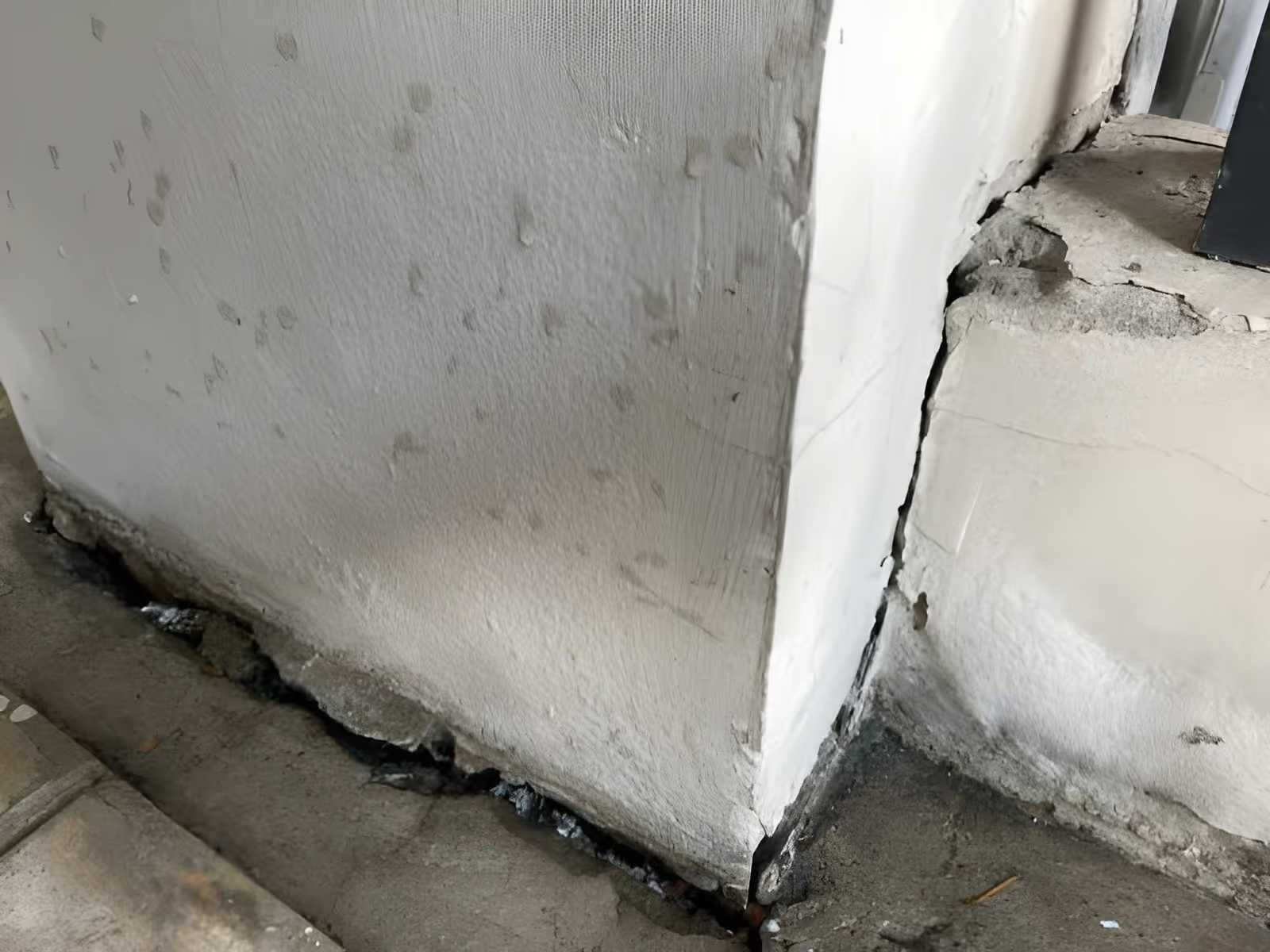
- Structural cracks - Wider cracks that indicate movement or settling in the slab
- Spalling - Flaking or chipping of the concrete surface, often caused by freeze-thaw cycles or deicing salts
- Alligatoring - A pattern of interconnected cracks resembling alligator skin, usually from age or poor base preparation
- Pop-outs - Small holes where aggregate (stones) have been ejected from the surface
- Scaling - Surface deterioration and flaking, common in areas exposed to salt or moisture
Many homeowners in the Bethesda area encounter spalling and scaling because of our regional climate. Winter moisture combined with temperature swings creates ideal conditions for concrete to break down if not properly sealed and maintained.
Professional Inspection & Crack Assessment
The first step in any concrete repair process is a thorough inspection. Not all cracks are equal, and treating them incorrectly wastes time and money. We assess each crack's depth, width, pattern, and underlying cause to determine the best repair method.
During our inspection, we look for several key factors:
- Crack width - Hairline cracks (less than 1/8 inch) are treated differently than wider structural cracks
- Crack pattern - Random cracks suggest different issues than geometric patterns
- Moisture presence - We check for water seeping into or under the crack
- Concrete condition - We evaluate overall surface condition, looking for signs of other damage nearby
- Root cause - Is this settling, thermal movement, poor drainage, or age-related deterioration
This assessment is crucial because it determines whether you need a simple cosmetic repair, a structural fix, or comprehensive floor restoration. Many homeowners are tempted to patch visible cracks without understanding the underlying issue, only to have cracks reappear months later. Our inspection prevents that disappointment by addressing the real problem.
Surface Preparation & Cleaning
Proper preparation is absolutely critical to the success of any concrete repair. Even the best repair materials won't adhere properly to a dirty, contaminated surface. Our surface preparation process is thorough and methodical.
We begin by cleaning the entire repair area to remove:
- Loose concrete and debris
- Dirt, dust, and residue
- Oil, grease, and stains
- Old coatings or sealers
- Any moisture or dampness
We use a combination of pressure washing, grinding, and vacuuming to ensure the surface is pristine. For cracks specifically, we often use compressed air and wire brushing to get deep into the crack itself, removing any material that would prevent proper adhesion of the repair material.
The concrete surface must also be properly roughened - if the surface is too smooth or slick, our repair materials won't bond effectively. This is why we sometimes lightly grind or abrade the area around the crack. This step might seem small, but it's one of the most important factors determining whether your repair lasts for years or fails within months.
Crack Routing & Preparation Techniques
Hairline cracks require different preparation than wider cracks. For small cracks, we may use a process called crack routing, which enlarges the crack slightly to create a better surface for our repair material to bond to.
Crack routing involves carefully widening the crack with specialized equipment to create a V-shaped or U-shaped channel. This accomplishes several goals:
- Creates more surface area for the repair material to bond to
- Removes any loose material along the crack edges
- Allows repair material to penetrate deeper into the crack
- Helps prevent the repair material from popping out later
For wider cracks, we may use different preparation techniques depending on the crack's characteristics and our chosen repair method. The goal is always the same: create the best possible surface for our repair material to achieve maximum adhesion and longevity.
Epoxy & Polyurethane Injection Methods
Once preparation is complete, we apply our chosen repair material. For concrete cracks, we primarily use two high-performance options: epoxy and polyurethane injection systems. Each has distinct advantages depending on your specific situation.
Epoxy Injection
Epoxy is our go-to solution for structural cracks and situations where maximum strength is the priority. Epoxy creates a chemical bond with the concrete, actually becoming harder than the surrounding concrete once cured. This makes it ideal for cracks where movement or stress is a concern.
Advantages of epoxy:
- Creates a permanent structural bond
- Becomes harder than surrounding concrete
- Excellent for load-bearing cracks
- Superior adhesion to concrete
- Long-lasting durability
- Cost-effective for many applications
Epoxy does require that the crack is completely dry - moisture can interfere with proper curing. We use specialized injection equipment to force the epoxy deep into the crack, ensuring complete fill from the bottom up.
Polyurethane Injection
Polyurethane is our preferred choice when moisture is present or when flexibility is important. Unlike epoxy, polyurethane can cure even in damp conditions, making it ideal for cracks that weep water or in situations where complete moisture control isn't possible.
Advantages of polyurethane:
- Cures even with moisture present
- More flexible than epoxy, accommodates slight movement
- Excellent for water-seeping cracks
- Lower odor than epoxy
- Expands slightly as it cures, filling voids thoroughly
- Creates a waterproof seal
Polyurethane's flexibility makes it particularly well-suited for active cracks that might move seasonally - a common situation in Bethesda where temperature swings can cause slight concrete movement.
Both materials are injected using low-pressure or high-pressure injection systems depending on the crack's characteristics. Low-pressure injection works for smaller cracks, while high-pressure systems are necessary for wider or deeper cracks where we need to ensure complete fill.
Patching & Leveling for Spalled Areas
Spalling and surface damage require a different approach than crack injection. When concrete has flaked away or deteriorated, we can't simply inject material into the void - we need to patch and rebuild the damaged area.
For spalled areas, our process includes:
- Removal of damaged concrete - We cut away all deteriorated material, creating clean, well-defined edges around the repair area
- Undercutting - We sometimes slightly undercut the edges to create a mechanical lock for the patching material
- Surface conditioning - The area is cleaned and primed as necessary
- Patching compound application - We apply a concrete patching compound that bonds to the existing concrete and hardens to match the surrounding surface
- Finishing - Once set, the patch is finished to match the surrounding floor texture
For areas where the concrete has also become uneven or where we're repairing multiple spalled areas, we may also perform leveling. This ensures your garage floor doesn't have tripping hazards and maintains proper drainage if your floor slopes intentionally.
Protective Coatings & Sealers
Once repair work is complete, we strongly recommend protective coating or sealing to prevent future damage. This is especially important in the Bethesda area, where our climate can be tough on concrete.
A quality protective coating serves several purposes:
- Prevents moisture infiltration - Keeps water from seeping into cracks and causing freeze-thaw damage
- Protects from chemicals - Guards against road salt, oil spills, and deicing chemicals
- Enhances appearance - Gives your floor a finished, professional look
- Extends concrete life - Dramatically increases how long your floor will look good and perform well
- Makes cleaning easier - Sealed concrete resists staining and is much simpler to clean
We offer several coating options depending on your needs and preferences. Some customers choose our epoxy or polyaspartic floor coatings for a completely transformed garage floor with color and gloss. Others prefer a clear penetrating sealer that protects without changing the appearance of the concrete.
For concrete that has been repaired, a sealer is particularly valuable. It seals the repair material and the surrounding concrete, creating a unified protective layer that prevents moisture from reaching the repair work you've just invested in.
Timeline & Cure Times
One common question homeowners ask is how long the repair process takes and when they can use their garage again. The timeline depends on the scope of work and the materials we're using.
Typical concrete repair project timeline:
For a standard crack repair project with epoxy injection, most work can be completed in a single day, though you should avoid using the garage for 24-48 hours while the material fully cures. Polyurethane-injected cracks typically cure faster - often ready for light use within 12-24 hours.
For spalled area patching, the process may take slightly longer depending on the extent of damage:
- Surface preparation and removal of damaged concrete: 1-2 hours
- Application of patching compound: 1-2 hours
- Curing time before the area can be used: 24-48 hours (depends on material)
- Optional coating application: Can be done once patch is cured
If you're combining crack repair with protective coating application, the timeline extends accordingly. We'll provide you with a specific schedule when we assess your floor, so you'll know exactly how long the project will take and when your garage will be fully ready for use.
Temperature matters during and after application. In cooler weather, curing times may extend slightly. In the Bethesda area, seasonal temperatures can affect application timing, which is one reason we'll discuss project scheduling when we meet with you.
Factors Affecting Repair Costs & Pricing
While we don't provide specific pricing on this page, understanding what factors influence repair costs helps you make informed decisions about your project.
Several variables determine the investment for concrete repair:
- Number and extent of cracks - More cracks or deeper cracks require more material and labor
- Crack width - Hairline cracks are less expensive to repair than wider structural cracks
- Surface condition - Floors requiring extensive preparation cost more than those in good condition
- Material selection - Polyurethane may cost more than epoxy but is necessary in wet conditions
- Repair method - Simple injection is less expensive than spalled area patching or leveling
- Area size - Larger projects may have economy of scale
- Protective coating - Adding a sealer or coating increases the investment but adds significant long-term value
- Accessibility - Project logistics can affect labor time and cost
The best approach is to think of concrete repair as an investment in your home's value and functionality. A floor that's properly repaired and protected will serve you well for years, while a poorly done or temporary fix can actually cost more in the long run as damage continues to spread.
Warranties & Durability Expectations
At Garage Design Source, we stand behind our work. When we complete a concrete repair project, we provide warranties on both materials and workmanship. The specific warranty terms depend on the repair method used and whether protective coatings are applied.
What you can typically expect:
Our epoxy and polyurethane injection systems come with manufacturer warranties covering material performance. We also warrant our workmanship to ensure that repairs are completed professionally and to industry standards. If properly applied to well-prepared surfaces, these repairs should last many years.
The durability of your repair depends on several factors:
- Quality of preparation - This is the single most important factor. Poor preparation leads to early failure; excellent preparation leads to long-lasting results
- Material selection - Using the right material for your specific situation is critical
- Protective coating - A quality sealer significantly extends the life of repairs by preventing moisture infiltration
- Maintenance - Proper cleaning and maintenance keep your floor in excellent condition
- Environmental factors - Climate and exposure conditions affect longevity
A properly repaired and sealed concrete floor in a garage should provide you with many years of trouble-free service. We've completed countless projects throughout the Bethesda area, and our customers enjoy repaired floors that look and perform great for years after completion.
Maintenance Tips for Repaired Concrete
Once your concrete repair is complete, a few simple maintenance practices will keep your floor looking great and prevent future damage.
Regular cleaning is the foundation of good concrete maintenance:
- Sweep regularly to remove dirt and debris
- Clean up spills promptly, especially oil or chemicals
- Pressure wash occasionally to remove stubborn dirt
- Use a pH-neutral cleaner rather than harsh acids or alkaline solutions
Preventive measures help protect your investment:
- Address water drainage issues to keep standing water off your floor
- Use floor mats or rugs in high-wear areas
- Keep the garage reasonably dry - good ventilation helps prevent moisture buildup
- Avoid using harsh de-icing salts on garage floors
- Seal or reseal your floor periodically to maintain protection
Regular inspection catches small problems before they become big ones:
- Check for new cracks or damage
- Look for signs of moisture problems
- Notice areas where the coating is wearing
- Address minor issues promptly rather than waiting for them to spread
These simple steps will maximize the lifespan of your repaired concrete and keep your garage looking its best.
Why Choose Garage Design Source for Concrete Repair
Garage Design Source has been serving homeowners throughout the Washington D.C. metro area, including Bethesda and the surrounding communities, for years. Our expertise in garage floors and surfaces goes far beyond simply repairing concrete - we understand how your entire garage works as a system, and we apply that knowledge to every project.
As a locally owned and operated company, we're invested in the neighborhoods we serve. We take pride in our work because we know our customers personally and care about our reputation in the community. When you choose Garage Design Source for concrete repair, you're choosing a team of specialists who understand garage floors and what it takes to make them look and function their best.
Our concrete repair and crack treatment services are just one piece of our comprehensive garage solutions. Whether you're repairing existing damage or planning a complete garage transformation, we have the expertise and materials to deliver results you'll love.