.svg)
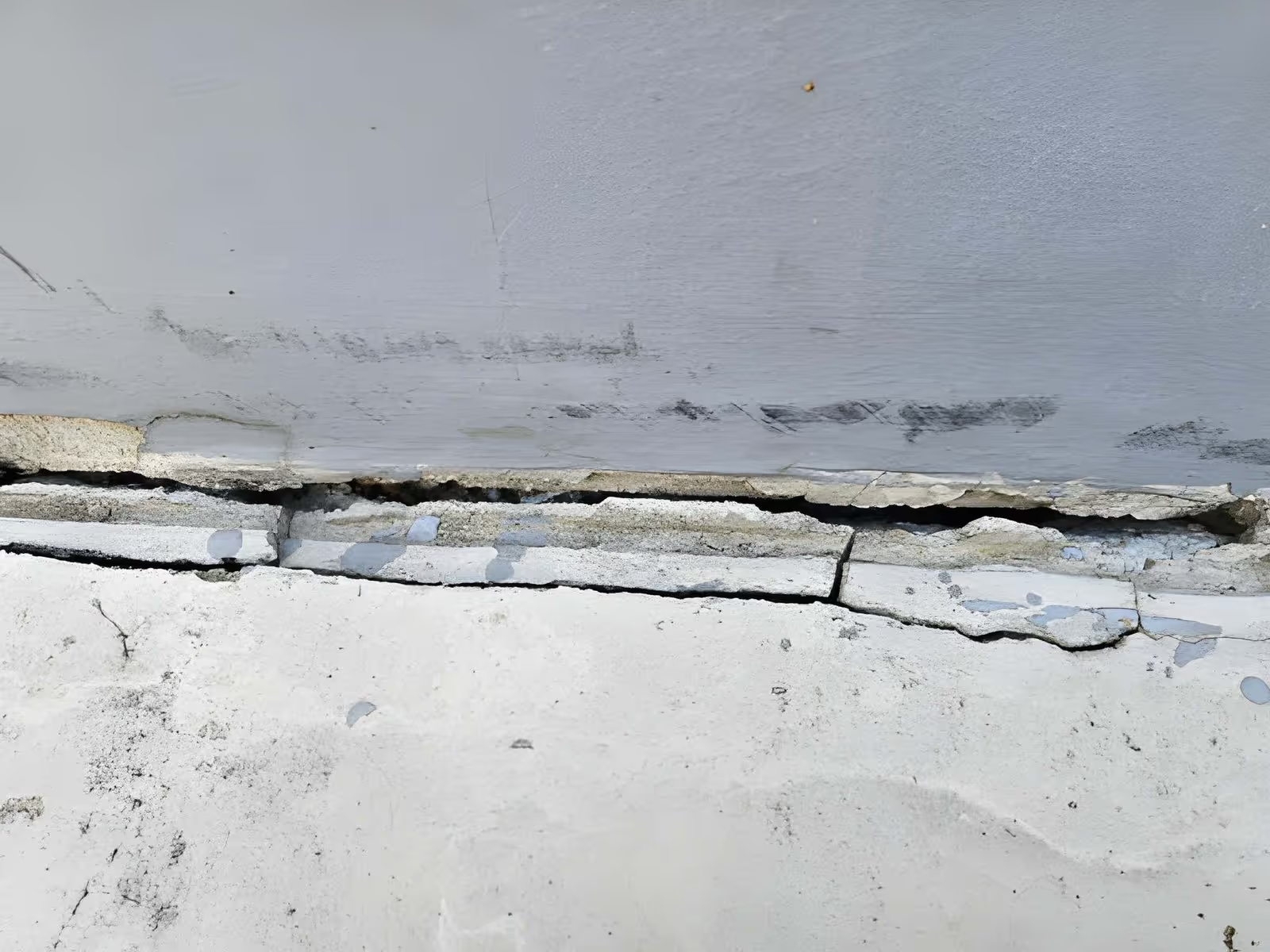
Your garage floor is one of the hardest-working surfaces in your home. Day after day, it supports the weight of vehicles, absorbs impacts from tools and equipment, and endures temperature fluctuations and moisture exposure. Over time, concrete naturally develops cracks - some hairline and barely noticeable, others wide and deep enough to catch your eye every time you pull into the driveway. Left untreated, these cracks worsen quickly, allowing water and salt to penetrate the concrete, leading to spalling, potholes, and structural compromise that can cost thousands to repair.
Concrete Repair and Crack Treatment in Vienna, VA
Your garage floor is one of the hardest-working surfaces in your home. Day after day, it supports the weight of vehicles, absorbs impacts from tools and equipment, and endures temperature fluctuations and moisture exposure. Over time, concrete naturally develops cracks - some hairline and barely noticeable, others wide and deep enough to catch your eye every time you pull into the driveway. Left untreated, these cracks worsen quickly, allowing water and salt to penetrate the concrete, leading to spalling, potholes, and structural compromise that can cost thousands to repair.
Garage Design Source specializes in professional concrete repair and crack treatment for Vienna, VA homeowners who want to restore their garage floors to like-new condition. Whether you're dealing with a single prominent crack or a network of damage across your driveway, our concrete repair services address the root causes of deterioration and provide durable, long-lasting solutions that protect your investment and restore the appearance of your garage space.
Common Concrete Problems in Vienna, VA Garages
Vienna's climate and local conditions create specific challenges for concrete surfaces. The DC metro area experiences freeze-thaw cycles during winter months, where moisture seeps into existing cracks, freezes, expands, and forces the concrete apart. This process repeats with every winter, accelerating crack growth and surface deterioration. Additionally, road salt and de-icing chemicals tracked into garages can chemically attack concrete, accelerating spalling and weakening the surface layer.
Common concrete issues we address include:
- Hairline cracks that develop from settling or minor concrete shrinkage during the curing process
- Wide structural cracks indicating potential foundation movement or deeper concrete failure
- Spalling - the flaking, chipping, or peeling of the concrete surface
- Potholes and surface deterioration caused by water infiltration and freeze-thaw damage
- Scaling - the loss of the top layer of concrete due to salt exposure and moisture
- Uneven or settled sections of concrete that create trip hazards or prevent proper drainage
- Staining from oil, rust, or water penetration that makes floors look aged and neglected
Each of these issues requires a different approach to repair. What works for a hairline crack won't solve a spalling problem, and temporary patching won't address underlying moisture or structural issues. This is why proper assessment and targeted treatment are essential.
Concrete Inspection and Crack Assessment
The first step in any concrete repair project is a thorough inspection to understand what you're dealing with. Many homeowners assume all cracks are the same and attempt one-size-fits-all repairs that fail within months. In reality, the cause, depth, and width of the crack determine the best repair method.
During our inspection, we evaluate several critical factors:
Crack Width and Depth - We measure the width of each crack using specialized tools. Hairline cracks (less than 1/16 inch) require different treatment than wide cracks (1/8 inch or wider). Depth is equally important - we assess whether cracks penetrate the full thickness of the concrete slab or are limited to the surface layer.
Crack Pattern and Direction - Random cracks scattered across the floor indicate different problems than a single long crack running the length of the garage. Linear cracks often suggest structural settlement or concrete shrinkage, while branching patterns may indicate stress from heavy loads or underlying movement.
Signs of Water Infiltration - We look for evidence of moisture, efflorescence (white powder deposits), or water staining around cracks. These signs indicate that water is already penetrating the concrete and causing internal damage that isn't visible on the surface.
Surface Condition - Beyond the cracks themselves, we assess the overall condition of the concrete. Is the surface deteriorating or spalling? Are there areas of weakness or loose concrete that need removal before repair?
Environmental Factors - We consider your garage's exposure to moisture, traffic patterns, and chemical exposure. A crack near a garage door that lets in rainwater needs different treatment than a crack in a protected interior area.
This comprehensive assessment allows us to recommend the most effective repair method for your specific situation rather than applying a generic solution.
Surface Preparation and Cleaning
Proper surface preparation is absolutely critical to repair success. Even the best repair material will fail if applied to a dirty, contaminated, or damaged surface. This is where many DIY attempts fall short - homeowners clean with a broom and apply repairs, only to watch them fail within months.
Our surface preparation process begins with thorough cleaning. We remove all dirt, dust, debris, and loose concrete from the crack and surrounding area using industrial-grade equipment. This isn't a simple vacuuming - we use high-pressure cleaning and grinding to remove all contaminants that could interfere with material bonding.
For wider cracks and damaged areas, we remove any loose or deteriorated concrete. If concrete is spalling or flaking, we remove it back to solid material. This may mean widening the crack slightly, but it ensures a stable foundation for repair materials. Soft or compromised concrete is ground or chipped away until we reach sound material.
We then address any moisture issues. If cracks show signs of water infiltration or if the concrete is damp, we take steps to dry the area thoroughly. Moisture is the enemy of epoxy and polyurethane repairs - applying these materials to damp concrete causes bonding failure and premature deterioration.
For oil stains or chemical contamination, we use appropriate cleaners to remove these substances. Concrete that still has residual oil or contaminants won't accept repair materials properly.
Finally, we profile the concrete surface to the appropriate texture for the repair method being used. Different treatments require different surface profiles - some need a smooth, clean surface while others benefit from slight texturing that helps materials bond mechanically.
Crack Routing and Preparation
For cracks wider than hairline size, we perform crack routing - widening and shaping the crack to accommodate repair material and improve bonding. This sounds counterintuitive, but routing small, tight cracks actually creates conditions for much better repair.
We use specialized routing equipment to cut a clean, consistent path along the entire crack. The width and depth of the routed path depend on the repair method we're using. For epoxy injection, we may route less aggressively than for polyurethane, since different materials have different flow characteristics and bonding requirements.
The routed path is typically V-shaped or rectangular in cross-section. A properly routed crack has clean edges and a consistent width, which helps repair material distribute evenly and bond completely to the concrete on both sides.
After routing, we vacuum out all dust and debris created by the routing process, then clean the routed crack with compressed air to ensure it's completely dry and free of dust particles. Any dust remaining in the crack will create weak points in the repair.
Epoxy and Polyurethane Injection Methods
The method we use to fill cracks depends on the crack characteristics and your specific needs. Garage Design Source uses two primary injection methods, each with distinct advantages.
Epoxy Injection - Epoxy is a rigid, extremely durable plastic that bonds chemically to concrete and creates a repair that's actually stronger than the original concrete. Epoxy flows well into tight cracks and works particularly well for structural cracks where you need maximum strength and minimal flexibility. Epoxy repairs won't move or flex, making them ideal for cracks that won't expand and contract with temperature changes. Once cured, epoxy is virtually permanent and won't degrade over time.
The advantages of epoxy include superior strength, excellent adhesion, and long-term durability. The primary limitation is that epoxy is rigid - if a crack is caused by ongoing settlement or structural movement, epoxy may re-crack as the concrete continues to move. Additionally, epoxy requires specific temperature and moisture conditions for proper curing, so timing matters for application.
Polyurethane Injection - Polyurethane is a flexible plastic that expands slightly as it cures, filling even tiny air pockets and voids within the crack. Unlike rigid epoxy, polyurethane maintains some flexibility after curing, which means it can accommodate minor concrete movement without cracking. Polyurethane also works better in damp conditions than epoxy and can even be applied to slightly moist concrete in some cases.
Polyurethane is ideal for cracks where you anticipate continued movement, for cracks in areas with high moisture exposure, or for situations where the crack pattern suggests ongoing stress. The flexibility of polyurethane allows it to move slightly with the concrete rather than locking into place like epoxy.
The choice between epoxy and polyurethane depends on the crack cause, the concrete's condition, and your garage's environmental exposure. During our inspection, we assess these factors and recommend the method most likely to provide lasting results for your situation.
Patching and Leveling for Spalled Areas
Beyond crack repair, many concrete floors have spalled areas - spots where the surface has flaked, chipped, or deteriorated. These areas require more comprehensive patching than simple crack injection.
For minor spalling, we clean out the damaged area, remove all loose concrete, and prepare the surface similar to crack repair. We then apply a concrete patching compound that fills the void and restores the surface level. Quality patching compounds bond chemically to concrete and cure to match the surrounding floor's hardness.
For more extensive spalling or areas with significant material loss, we may use self-leveling concrete repair materials that can fill larger voids and automatically level themselves to match the surrounding floor. These materials are thicker than crack fillers and are designed specifically for larger repairs.
In areas where spalling has created uneven surfaces or lip edges that create trip hazards, we grind and level the patched area to blend smoothly with the surrounding floor. This creates a safe, uniform walking surface and ensures proper drainage and appearance.
For very large damaged areas - such as extensive spalling across multiple square feet - we may recommend concrete resurfacing rather than patching. A resurfacing overlay applies a new wearing surface across the damaged area, creating a seamless, uniform finish.
Protective Coatings After Repair
Concrete repair alone stops the current damage, but protecting the repaired and surrounding concrete prevents future problems. This is where Garage Design Source's expertise in garage floor coatings becomes invaluable.
After crack repair and patching, we typically recommend a protective coating system. These coatings seal the concrete surface, preventing water infiltration while also protecting against oil stains, chemicals, and salt damage. Additionally, coatings dramatically improve the appearance of your garage floor, transforming it from a stained, worn surface to a clean, attractive finish.
Epoxy Coatings - A two-part epoxy coating creates a hard, durable plastic surface over the concrete. Epoxy provides excellent chemical resistance and durability, making it ideal for garage floors that experience regular traffic, vehicle fluids, and temperature changes. Epoxy coatings are attractive, easy to clean, and can last 5-10 years with proper maintenance.
Polyaspartic Coatings - Polyaspartic is a fast-curing cousin of polyurethane that offers similar benefits to epoxy but with faster cure times and better UV resistance. Polyaspartic coatings are slightly more flexible than epoxy, making them better suited to concrete that moves slightly due to temperature or moisture changes.
Polyurea Coatings - Polyurea is the most durable and flexible option, offering extreme durability and the fastest cure times. Polyurea coatings can handle high traffic and significant temperature fluctuations, making them ideal for heavily used garages or areas with extreme weather exposure.
A protective coating over your repaired concrete ensures that water can't re-infiltrate cracks, prevents salt and chemicals from attacking the concrete, and extends the life of your repair investment significantly. In Vienna's climate, where freeze-thaw cycles and road salt exposure are significant concerns, a quality coating is one of the best investments you can make in your concrete's longevity.
Expected Timelines and Cure Times
Concrete repair timelines vary based on the repair method, crack size, and environmental conditions. Understanding these timelines helps you plan your garage use during the repair and curing process.
Inspection and Assessment - Our initial inspection and assessment typically takes 30-60 minutes, depending on the extent of damage. We provide recommendations and can often schedule repairs within days.
Surface Preparation and Cleaning - Preparing the concrete surface usually takes 2-4 hours for a standard two-car garage, depending on how much cleaning and grinding is required. In some cases, extensive spalling may require additional time.
Crack Routing and Injection - The actual routing and injection of cracks typically takes 4-8 hours for a moderately damaged garage floor. Smaller areas may be completed faster, while extensive cracking across a large space may require a full day.
Patching and Leveling - Patching spalled areas and leveling repairs adds 2-6 hours depending on the extent of damage.
Coating Application - Applying a protective coating system takes 4-8 hours for application, not including drying time.
Total Project Duration - Most garage concrete repair projects can be completed in 1-2 days of active work time. However, curing and recoating may require additional time.
Cure Times Before Use - This is where timing becomes critical:
- Epoxy repairs typically require 24-48 hours before the garage can be used for light traffic (walking)
- Full cure and ability to park heavy vehicles typically takes 5-7 days
- Polyurethane repairs may cure faster, sometimes allowing light use within 12-24 hours
- Polyaspartic and polyurea coatings cure extremely rapidly, sometimes allowing use within 4-8 hours
Environmental conditions significantly affect cure times. Cooler temperatures and higher humidity slow curing, while warm, dry conditions accelerate it. We'll provide specific cure time guidance based on weather conditions at the time of your project.
We schedule projects strategically to minimize disruption. Many repairs can be timed around your schedule to ensure your garage is available when you need it.
Warranties and Durability Expectations
Quality concrete repair, when properly executed, provides long-lasting results. Garage Design Source stands behind our work with warranties that protect your investment.
Typical Warranty Coverage - We offer warranties on both materials and workmanship. The specifics depend on the repair method used, but you can generally expect:
- Epoxy crack repairs and patching - typically 3-5 year warranty against failure from our workmanship
- Material warranties from our suppliers covering manufacturing defects
- Coating warranties covering adhesion and durability for the coating system applied
What Warranties Cover - Our warranties cover failures due to poor workmanship, improper material selection, or manufacturing defects. They guarantee that repairs won't fail due to inadequate surface preparation, incorrect application, or material incompatibility.
What Warranties Don't Cover - Warranties typically exclude damage from extreme structural movement, ongoing settlement issues, water flooding or standing water conditions, or damage from external factors beyond normal weather exposure. If your garage has serious drainage problems or structural issues, those must be addressed separately.
Durability Beyond Warranty - With proper maintenance, concrete repairs often last well beyond the warranty period. Properly sealed and maintained concrete can last 10-20 years or longer. The key factors affecting durability are:
- Quality of the original repair work
- Type of materials used (epoxy and polyurethane last longer than basic concrete patching compounds)
- Environmental exposure (Vienna's freeze-thaw cycles impact durability more than milder climates)
- Maintenance and care after repair
Maintenance and Long-Term Care
Extending the life of your concrete repair requires basic maintenance that's easy to implement.
Regular Cleaning - Clean your garage floor regularly with a broom or vacuum to remove dirt and debris. Occasional washing with mild soap and water keeps the floor looking fresh. Avoid harsh chemicals that can damage coatings.
Spill Management - Clean up oil, coolant, and chemical spills promptly. The longer these substances sit on concrete, the more they can penetrate and damage both the concrete and any protective coating.
Drain Maintenance - If your garage has floor drains, keep them clear so water drains properly rather than pooling on the floor. Standing water is the enemy of concrete longevity.
Avoid Harsh De-icers - In winter, avoid using harsh salt-based de-icers in or near your garage. These chemicals accelerate concrete deterioration. Use pet-safe de-icers or sand for traction instead.
Recoat as Needed - If you applied a protective coating, monitor its condition. When the coating begins to wear thin or show areas of degradation, recoating will restore protection and extend concrete life. Most homeowners recoat every 3-5 years depending on traffic and environmental exposure.
Address New Cracks Promptly - If new cracks develop after repair, address them quickly before they expand. Early treatment is always more effective and less expensive than waiting until cracks are wide and deep.
Why Choose Garage Design Source for Concrete Repair
Garage Design Source brings specialized expertise to concrete repair that general contractors often lack. We focus exclusively on garage solutions, which means we understand the specific challenges Vienna, VA garages face and the durability standards your floor requires.
We're locally owned and operated in the Washington D.C. metro region, serving homeowners like you for nearly two decades. We've completed hundreds of concrete repair projects across Northern Virginia, giving us deep experience with local soil conditions, climate challenges, and customer expectations.
Our approach emphasizes quality workmanship and material selection. We don't apply one-size-fits-all solutions - each project receives a custom assessment and tailored repair plan. We use professional-grade materials and equipment that deliver superior results compared to DIY approaches or amateur repairs.
Beyond concrete repair alone, we're uniquely positioned to address your complete garage transformation. After repairing your concrete, many customers choose to protect and beautify their floor with one of our premium epoxy or polyaspartic coating systems. Others address additional garage concerns like door repairs, storage systems, or cabinetry upgrades. Your garage doesn't exist in isolation, and neither should its improvements.
We stand behind our work with warranties and follow-up support that gives you confidence your repair will last. We educate customers about maintenance and long-term care, helping you protect your investment for years to come.
Getting Started with Concrete Repair in Vienna, VA
If you're concerned about cracks in your garage floor or noticing spalling and deterioration, the first step is a professional assessment. What appears to be a simple surface problem might indicate deeper concrete issues that need targeted repair. Conversely, damage that looks severe might be more straightforward to address than you expect.
Garage Design Source offers thorough inspections and detailed repair recommendations. We'll explain what you're dealing with, why it matters, and what repair method makes sense for your specific situation. We'll provide clear timelines, answer your questions, and give you confidence that your concrete is in capable hands.
Your garage floor supports everything you do in that space - parking your vehicle, storing your tools and equipment, working on projects, or simply keeping your home organized. It deserves proper care and professional repair when damage develops. Reach out to Garage Design Source to schedule your concrete inspection and discover how we can restore your garage floor to like-new condition.