.svg)
Electric vehicle ownership is growing rapidly across Northern Virginia, and Herndon homeowners are increasingly recognizing the convenience and value of having a dedicated charging station at home. Whether you're a new EV owner or upgrading your existing setup, professional EV charger installation is one of the smartest investments you can make for your garage. At Garage Design Source, we specialize in transforming garages into functional, modern spaces - and that includes integrating reliable EV charging infrastructure that works seamlessly with your home's electrical system.
EV Charger Installation in Herndon, VA
Electric vehicle ownership is growing rapidly across Northern Virginia, and Herndon homeowners are increasingly recognizing the convenience and value of having a dedicated charging station at home. Whether you're a new EV owner or upgrading your existing setup, professional EV charger installation is one of the smartest investments you can make for your garage. At Garage Design Source, we specialize in transforming garages into functional, modern spaces - and that includes integrating reliable EV charging infrastructure that works seamlessly with your home's electrical system.
The difference between a DIY approach and professional installation comes down to safety, compliance, and long-term performance. Our team understands the technical requirements, local permitting codes, and best practices that ensure your charger operates efficiently and safely for years to come. If you're in the Herndon area and considering EV charger installation, understanding your options and what the process involves is the first step toward making an informed decision.
Why Professional EV Charger Installation Matters
Installing an EV charger isn't simply a matter of plugging something into an outlet. Your home's electrical panel has specific capacity limitations, and adding a high-power charging station requires careful assessment to avoid overloading your system. A professional installation ensures that your charger integrates properly with your home's electrical infrastructure while meeting all Virginia state codes and local Herndon building requirements.
When you choose professional installation, you're investing in several key benefits. First, you gain peace of mind knowing that your system is safe and won't create fire hazards or electrical problems. Second, you avoid costly mistakes that could damage your home's wiring or your vehicle. Third, a professionally installed system often qualifies for rebates and incentives that DIY installations may not, potentially saving you thousands of dollars.
Professional installers also bring expertise in optimizing the placement and type of charger for your specific situation. They can assess your daily charging needs, evaluate your electrical capacity, recommend upgrades if necessary, and guide you toward the solution that delivers the best return on investment for your home.
Understanding Your Electrical System Requirements
Before any charger can be installed, a thorough assessment of your home's electrical capacity is essential. Most homes in Herndon have electrical panels rated at 100 to 200 amps. Adding a Level 2 EV charger typically requires 30 to 60 amps of dedicated circuit capacity, depending on the charger's power rating. Our team evaluates your panel to determine whether your current capacity can accommodate a new circuit or whether an upgrade is necessary.
Electrical panel upgrades are sometimes needed, particularly in older Herndon homes or if your household already uses significant power for HVAC, water heating, and other major appliances. A panel upgrade involves installing a new main breaker and expanding the number of available circuits. While this adds to the project cost, it's a one-time investment that provides flexibility for future home improvements and ensures your charging system operates at optimal efficiency.
During the assessment phase, we also evaluate the distance between your electrical panel and the proposed charger location. Longer distances require heavier gauge wiring and conduit, which affects both cost and installation complexity. This is why planning the charger location early in the process matters - it influences both the technical requirements and the overall project timeline.
Comparing EV Charger Types and Options
Not all EV chargers are created equal, and your choice depends on your vehicle type, charging needs, and garage setup. Understanding the differences helps you make the right decision for your situation.
Level 1 Chargers use a standard 120-volt household outlet and are the slowest option, adding roughly 3 to 5 miles of range per hour of charging. Most EV owners find Level 1 insufficient as a primary charging solution, particularly in Northern Virginia where many drivers have long commutes. Level 1 is typically a backup option rather than a primary installation.
Level 2 Chargers operate on 240-volt circuits and are the most popular choice for residential EV charger installation in Herndon. Level 2 adds approximately 25 to 30 miles of range per hour, allowing most EV owners to fully charge their vehicle overnight. A Level 2 installation requires a dedicated 40 to 60-amp circuit and typically costs between a few thousand to several thousand dollars including electrical work and permitting.
Smart Chargers are Level 2 chargers equipped with WiFi connectivity and intelligent features that allow you to schedule charging during off-peak hours, monitor charging remotely, and integrate with home energy management systems. For Herndon homeowners with time-of-use electricity rates, a smart charger can provide significant savings by shifting charging to lower-cost hours. Smart chargers also offer future-proofing, as utilities increasingly adopt dynamic pricing models.
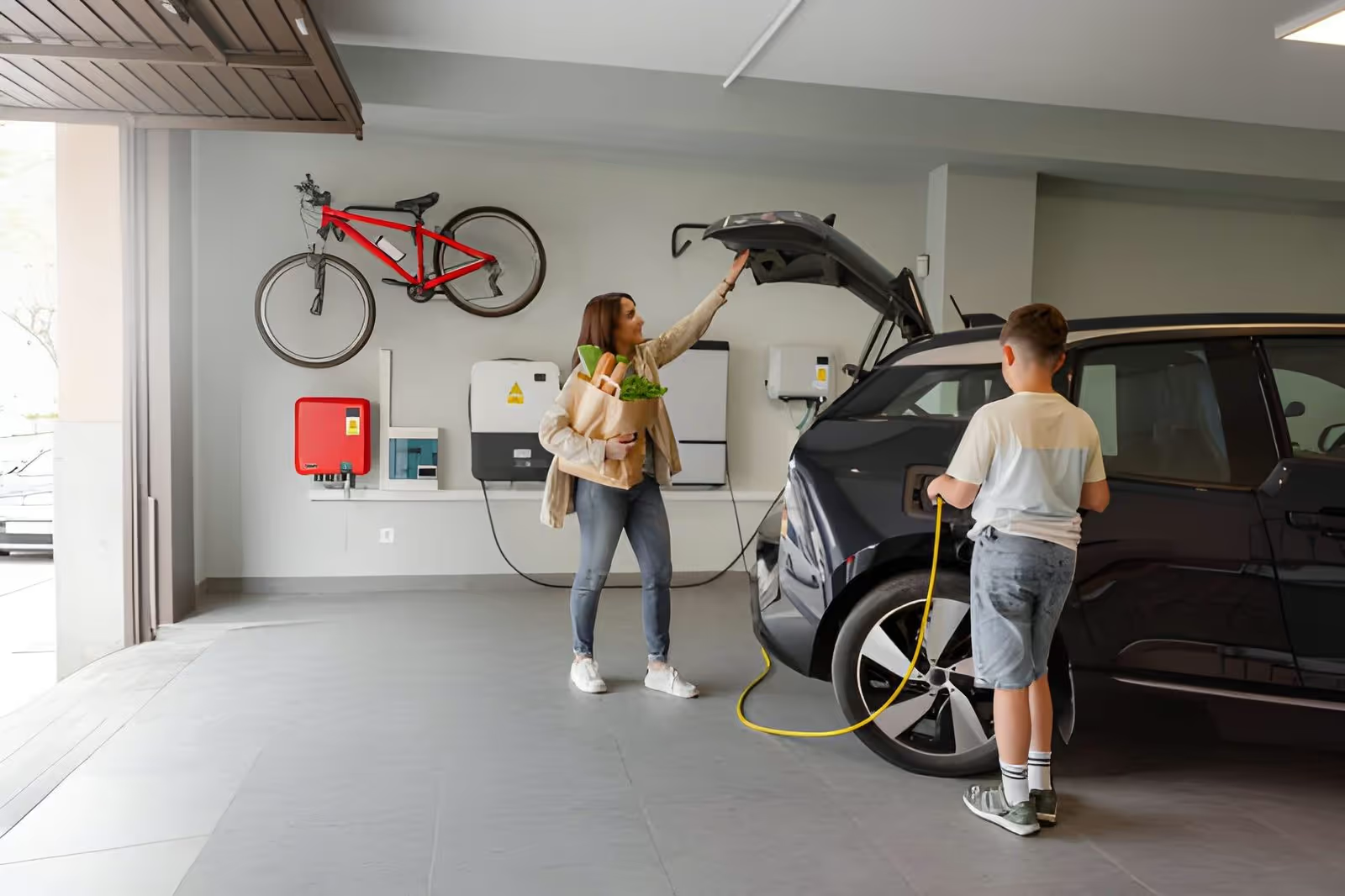
For most Herndon homeowners, a wall-mounted Level 2 charger represents the optimal balance of convenience, cost, and charging speed. Pedestal chargers are an alternative if wall mounting isn't feasible, though they take up more floor space in your garage. Your choice should reflect your daily driving patterns, vehicle battery size, and long-term plans for EV ownership.
Site Planning and Charger Placement
Choosing the right location for your EV charger is crucial for both functionality and garage organization. Garage Design Source takes a holistic approach, considering not just where your car parks, but how your charger fits into your overall garage layout alongside storage systems, flooring, and other improvements.
Wall-mounted chargers are typically installed at a height of 3.5 to 4.5 feet, positioned to align with where your vehicle's charge port will be when parked. Installing the charger slightly behind or to the side of the expected parking location prevents tripping hazards while keeping the charging cable accessible. We ensure that the mounting location doesn't interfere with garage doors, overhead storage, or your ability to park comfortably.
Pedestal chargers are floor-mounted and work well in garages with limited wall space or where you want flexibility to charge different vehicles. Pedestals require a concrete pad or reinforced floor to prevent movement, and we coordinate this with our garage flooring expertise to ensure your pedestal integrates seamlessly with epoxy or polyaspartic floor coatings.
Clearance and cord management are also critical. Professional installation includes planning how the charging cable will route and store when not in use. We ensure sufficient clearance for doors to open fully, tools to be used, and other activities in your garage. Many Herndon homeowners appreciate integrating charger placement with their overall garage storage and organization strategy, and we can coordinate this during the planning phase.
Permitting and Code Compliance in Herndon, Virginia
Virginia electrical code and Herndon building regulations govern every aspect of EV charger installation, from wire gauge and circuit protection to grounding and safety disconnect switches. This is one area where professional installation is non-negotiable - mistakes can result in failed inspections, fines, or worse, safety hazards.
Garage Design Source handles all permitting requirements on your behalf. This includes obtaining the necessary electrical permits from Herndon building authorities, ensuring your installation plan complies with current Virginia electrical code, and scheduling inspections at each phase of the work. We're familiar with Herndon's specific requirements and timelines, which streamlines the process and prevents costly delays.
Required inspections typically occur after rough-in work (when wiring and conduit are installed but before the charger is mounted) and after final installation. Our team coordinates with local inspectors to ensure smooth approvals and keeps you informed throughout the process. Proper permitting also protects your home's resale value, as future buyers will have confidence in a permitted, inspected installation.
The Professional Installation Process
Understanding what happens during EV charger installation helps you prepare and know what to expect. Our installation process typically follows these key phases.
Phase One - Electrical Assessment and Planning. We evaluate your electrical panel, determine circuit availability, and identify whether a panel upgrade is needed. We discuss charger options, placement logistics, and provide a detailed scope of work and timeline. This phase concludes with permitting - we submit all required documentation to Herndon authorities and obtain necessary approvals.
Phase Two - Electrical Preparation. Once permits are approved, our electrician runs conduit and wiring from your panel to the charger location, installs the dedicated circuit breaker, and sets up the disconnect switch and other safety components. A rough-in inspection occurs at this stage to verify that all electrical work meets code requirements.
Phase Three - Charger Installation. We mount the charger to the wall or pedestal, connect it to the prepared electrical system, and perform final wiring connections. The charger is tested extensively to ensure all functions work correctly.
Phase Four - Final Inspection and Testing. After installation is complete, Herndon building authorities perform a final inspection. We conduct comprehensive testing of the charger's functionality, safety features, and integration with your vehicle. Once everything passes inspection, your charger is ready for use.
Phase Five - Homeowner Orientation. We provide detailed instruction on operating your charger, understanding its features, using any smartphone apps, and basic maintenance. We review warranty information and answer any questions about your system.
Estimated Timeline and Project Duration
Most EV charger installations in Herndon take 2 to 4 weeks from initial assessment to final inspection and activation. This timeline accounts for permitting review by local authorities, which varies depending on inspection schedules and workload.
The actual installation work typically requires 1 to 2 days, depending on whether an electrical panel upgrade is needed and the complexity of running conduit to your charger location. If your home's panel is easily accessible and your charger location is close to it, the installation moves faster. If your panel is in a basement and your charger is in a detached garage, or if panel upgrades are required, expect the project to take longer.
Permitting is usually the longest component of the timeline. Herndon generally processes electrical permits within 1 to 2 weeks, and inspectors typically schedule appointments within 2 to 5 business days of a request. Our team stays on top of these timelines and keeps you updated throughout.
Understanding Rebates and Incentive Programs
One of the most attractive aspects of professional EV charger installation is the availability of federal, state, and utility rebates that can significantly offset your costs. The federal government offers a tax credit for residential EV charger installation, which can cover a substantial portion of your installation expenses. Virginia also offers state-level incentives in some cases, and Dominion Energy (the primary utility serving Herndon) occasionally offers rebates for customers installing Level 2 chargers.
These incentives frequently have specific requirements - for example, many require that installation be performed by a licensed, permitted professional. This is another compelling reason to choose professional installation over DIY approaches. Our team is familiar with all applicable incentive programs and ensures your installation meets the specific requirements to qualify for available rebates.
Incentive amounts and eligibility criteria change periodically, so it's worthwhile to discuss current programs during your consultation. We can provide guidance on what you may be eligible for and help you understand how rebates affect your actual out-of-pocket investment.
Safety Features and System Design
Professional EV charger installations incorporate multiple safety layers that protect both your vehicle and your home. Modern Level 2 chargers include ground fault circuit interrupter (GFCI) protection, which detects electrical leaks and shuts down the charger instantly if any anomaly is detected. They also include temperature monitoring, ensuring that the charger doesn't overheat during use.
A disconnect switch, required by Virginia electrical code, allows you to safely disconnect power to the charger for maintenance or troubleshooting. The charger itself communicates with your vehicle to ensure safe charging parameters, preventing overcharging and regulating current flow based on your vehicle's capabilities.
Professional installation also ensures that all connections are properly sealed and protected from moisture and physical damage. Conduit protects wiring throughout its run, and the charger itself is rated for garage environments. These design considerations are what differentiate professional installations from amateur efforts - they provide protection that extends the life of your equipment and keeps your family safe.
Warranty Coverage and Long-Term Support
When you choose Garage Design Source for your EV charger installation, you receive comprehensive warranty coverage. The charger itself typically includes a manufacturer's warranty covering defects and performance issues. Our professional installation is also backed by our commitment to quality workmanship - if any installation-related issues arise, we address them promptly.
We maintain detailed records of your installation, including all permits, inspections, and test results. These records are valuable if you ever need warranty service or if you're planning to sell your home. They document that your charger is properly installed and has passed all required inspections, which enhances your home's value and gives buyers confidence in the system.
Long-term support is part of our commitment to your satisfaction. If you have questions about your charger's operation, need to schedule maintenance, or encounter any issues, our team is available to help. We can assist with software updates, troubleshooting connectivity issues with smart chargers, or any other support your system may need.
Post-Installation Testing and Verification
Before you take the keys to your new EV charger, our team conducts comprehensive testing to ensure everything operates perfectly. This includes verifying proper voltage output, testing all safety features, confirming that the charger recognizes your vehicle, and validating charging speed and efficiency.
We test the charger under actual operating conditions, running it through a full charging cycle to confirm that all functions work as designed. We verify that smart features, if your charger includes them, connect properly to WiFi and that you can access the app or web interface from your smartphone or computer. We also test the disconnect switch, ensure GFCI protection functions correctly, and verify that all temperature sensors and safety systems respond appropriately.
This thorough verification process catches any potential issues before they become problems, ensuring that your first actual charging experience is seamless and confident.
Integrating Your Charger Into Your Garage Design
One of the advantages of choosing Garage Design Source is our expertise in creating cohesive garage environments. Your EV charger doesn't exist in isolation - it's part of your overall garage space. As you consider charger installation, it's an excellent time to think about how other garage improvements might enhance your space.
Many Herndon homeowners coordinate their EV charger installation with garage floor coatings, storage system upgrades, or garage door replacements. A freshly coated epoxy or polyaspartic floor provides a modern backdrop for your new charging station, while strategic storage and organization systems keep tools, equipment, and seasonal items neatly arranged. The result is a garage that feels like a true extension of your home - functional, organized, and attractive.
If you're interested in exploring how charger installation fits into a broader garage transformation, our team can discuss integrated solutions during your consultation.
Common Questions About EV Charger Installation
How long does a full charge take with a Level 2 charger? Most modern EVs charge fully overnight on a Level 2 charger. A typical charge adds 25 to 30 miles of range per hour, so a vehicle with a 300-mile range battery would fully charge in 10 to 12 hours. Actual time varies based on your vehicle's battery size and charger power rating.
Do I need a backup power source for my charger? No. Your EV charger operates on your home's electrical system and doesn't require backup power or a generator. During power outages, your charger simply won't function, but your vehicle's battery remains unaffected.
Can I install a charger in a detached garage? Yes. If your detached garage is close to your home, running conduit underground or overhead is feasible. If it's very far away, the cost of running heavy-gauge wire may be prohibitive. Our assessment determines whether a detached location is practical for your situation.
Will my charger work with multiple vehicles? Yes, though you can only charge one vehicle at a time on a single charger. If you own multiple EVs and want simultaneous charging, a second charger would be required.
What maintenance does my charger require? Modern EV chargers require minimal maintenance. Occasionally inspect the charger and cable for damage, and keep the area around it clear of debris. Annual professional inspection is recommended to ensure all components function properly.
Is my charger compatible with all EV models? Most modern Level 2 chargers use the standard J1772 connector, which works with all current U.S. electric vehicles. However, certain premium vehicles or specific charging networks may require adapters. Our team confirms compatibility with your specific vehicle during the installation process.
What happens if the power goes out? Your charger stops operating during a power outage, just like any other electrical device. Once power is restored, your charger resumes normal function. There's no risk to your vehicle's battery.
Garage Design Source brings specialized expertise, professional credentials, and a commitment to quality that transforms your EV charger installation from a technical necessity into a seamless addition to your home. As locally owned and operated specialists in garage solutions throughout the Washington D.C. metro region, we understand the specific needs of Herndon homeowners and the importance of reliable, compliant installations. If you're ready to take the next step in EV ownership, we're here to guide you through the entire process with professionalism and expertise.